Discover Coworking & Creative Spaces in Schwerin
Coworking & Creative Spaces in Schwerin: Dates, Formats, and Ideas for Upcoming Events (2026–2027)
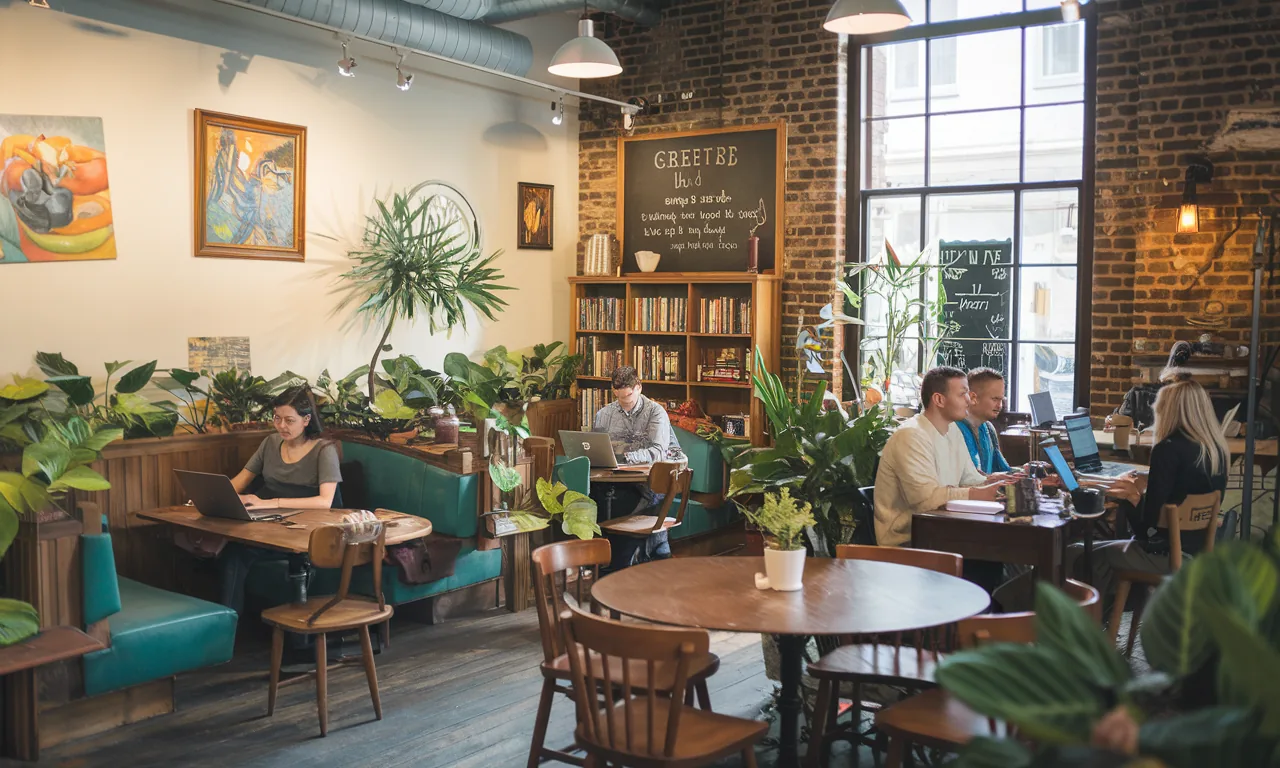
Those who work, found companies, or produce creatively in Schwerin often seek not just a desk, but also exchange, focus times, and opportunities to make projects visible. This article compiles formats for future events that can be particularly well implemented in coworking environments, creative houses, and workation settings in and around Schwerin.
Outlook: Which Event Formats Make Sense Next in Schwerin
For 2026–2027, events are especially useful that start low-threshold (without major production effort) but deliver high value for participants: clear work progress, new contacts, feedback, and local visibility. In coworking and creative spaces, the following work particularly well:
- Focus Formats (e.g. “Deep-Work Morning,” “Co-Writing,” “Silent Coworking”): plannable, quiet, effective.
- Meetups (e.g. “Freelancers’ Meetup,” “Remote Afterwork,” “Founders’ Round”): ideal for networking and cooperation.
- Skill Sessions (e.g. short workshops on presentations, project management, AI workflows, brand building): high added value in 60–120 minutes.
- Creative Showcases (e.g. portfolio evenings, mini-exhibitions, listening sessions, short film screenings with Q&A): strengthens the local culture and creative economy.
- Workation Sprints (e.g. 2–4 days “Advance Your Project” at the lake): good for small teams or solo freelancers with a clear goal.
Important for planning: An event is convincing when it promises a clear result (e.g. “At the end, there is a pitch deck draft,” “At the end, 90 minutes of focused work are done,” “At the end, there is feedback on 3 portfolio pieces”).
Sample Calendar 2026: Suggestions for Concrete Future Dates
The following dates are intended as concrete, feasible suggestions that can be reconciled with the usual opening and evening hours of many coworking and creative venues. You can use these dates as a starting point and publish them locally as soon as space, host, and ticketing are set.
May–June 2026
- 2026-05-12: “Deep-Work Morning” (2.5 hours) — silent work with a brief goal check-in.
- 2026-05-26: “Freelancers’ Afterwork” (90 minutes) — get to know each other, 1–2 lightning talks, open round.
- 2026-06-09: “Co-Writing: Website Text & Offer” (2 hours) — writing time + peer feedback.
- 2026-06-23: “Portfolio Review Evening” (2 hours) — show creative work, structured feedback.
September–October 2026
- 2026-09-15: “Workshop: Presenting Without Stress” (2 hours) — structure, storyline, Q&A training.
- 2026-09-29: “Remote Team Meetup” (90 minutes) — exchange on tools, communication, rituals.
- 2026-10-13: “Mini-Barcamp: Creative & Digital in Schwerin” (3 hours) — 6–8 sessions, short slots.
- 2026-10-27: “Founders’ Consultation (Peer Edition)” (2 hours) — problem rounds, next steps.
January–March 2027
- 2027-01-19: “Annual Planning in Coworking” (2 hours) — goals, quarterly plan, focus list.
- 2027-02-09: “AI Workflow Clinic” (2 hours) — practical examples, prompt check, data protection notes.
- 2027-03-09: “Showcase Evening: Music/Film/Design” (2–2.5 hours) — contributions + moderated discussion.
- 2027-03-23: “Workation Sprint: Preparing Project Completion” (½ day) — focus blocks + review.
Format Building Blocks for Coworking Café, Meeting Room, Creative Quarter & Workation
1) Coworking Café in the City Center: Short, Regular Formats
In a café-like coworking setting, events work best when they are simple: short duration, clear rules, little technology. Suitable are:
- “1–3–1 Networking”: 1 minute introduction, 3 minutes project/question, 1 minute next step.
- Silent Sessions: 90 minutes quiet work, then 15 minutes exchange.
- Lightning Talks: 3–5 talks of 7 minutes each with 3 minutes for questions.
2) Meeting Room: Workshops, Client Formats, Team Days
A separate meeting room is ideal for formats with moderation, whiteboard/flipchart, and confidentiality. Proven formats are:
- Strategy Workshop (2–4 hours): vision, priorities, next 30 days.
- Skill Lab (90–120 minutes): one topic, one exercise block, one handout.
- Retrospective (90 minutes): What went well? What do we change? What do we test until next time?
3) Creative Quarter: Showcases, Open Studios, Interdisciplinary Evenings
Creative venues benefit from formats that connect production and audience. For 2026–2027, the following are particularly suitable:
- “Open Studio Night”: short tours, then moderated discussion rounds.
- “Collab-Matching”: 10-minute pitches, then targeted 1:1 matches.
- “Workshop & Feedback”: participants bring drafts (audio/video/print/text) and receive structured feedback.
4) Workation Setting at the Lake (Schwerin Region): Sprints and Offsites
Workation formats are strong when they have a concrete work assignment and use relaxation as a framework, not as a distraction. Good building blocks:
- 2-Day Sprint: Day 1 “Draft,” Day 2 “Finish & Review.”
- Offsite for Small Teams: Moderation in the morning, focus work in the afternoon, closing round.
- “No-Meeting Day”: clear rules on when to talk and when not to.
A good event is not the one that promises the most, but the one that measurably improves something for participants: clarity, output, contacts, or motivation.
Organization: Registration, Moderation, Technology, and Process
Registration & Communication (future-proof, uncomplicated)
- Clear target group: e.g. freelancers, remote employees, creatives, founders, teams.
- One-sentence value proposition: “You go home with X” (e.g. “a revised portfolio pitch”).
- Transparent capacity: e.g. 12 places (workshop) / 30 places (meetup).
- Waiting list: reduces no-shows and increases reliability.
Moderation: Simple Structure That Works Every Time
- Arrival (10 min.): Welcome, rules (volume, phone zones, photos).
- Set goals (5 min.): each person formulates a mini-goal.
- Work/program area (60–120 min.): focus blocks or sessions.
- Conclusion (10–15 min.): results, next steps, exchange.
Technology & Room Setup
- Audio: for talks, a simple microphone; otherwise, prefer short slots over “too quiet.”
- Visuals: whiteboard/flipchart + timer (visible) for tight processes.
- Hybrid only if really necessary: If online, then clear roles (host, chat moderation).
- Quiet zones: especially for coworking formats, actively manage volume.
Law & Trust: Data Protection, Image Rights, Liability, Accessibility
To ensure upcoming events appear professional, hosts should clarify and communicate the most important trust topics in advance:
Data Protection (participant lists, newsletter, ticketing)
- Only collect data necessary for execution (data minimization).
- Communicate purpose, storage duration, and contact for information/deletion.
- Use double opt-in when sending invitations as newsletters.
Photo and Video Recordings
- Announce recordings in advance and visibly on site.
- Provide an opt-out option (e.g. area without camera; marking on name badge).
- Obtain explicit consent for planned interviews/statements.
Accessibility & Participation
- Communicate in advance: steps, elevator, door widths, accessible restroom, quiet retreat area.
- Keep content understandable: agenda, clear language, easily readable materials.
- Plan buffer times for arrival and breaks.
Note: This article provides organizational guidance for future events and does not replace individual legal advice. If you publish internal guidelines or house rules, link to them in the event description.