
Ehm Welk
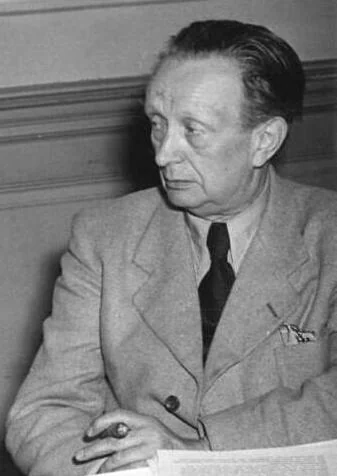
Image from Wikipedia
Image from Wikipedia
Ehm Welk – The Storyteller of North German Homeland Between Humor, Attitude, and Literary Precision
An Author Who Shaped Great Literature from Everyday Life
Ehm Welk, whose real name is Gustav Emil Welk and known under the pseudonym Thomas Trimm, is one of the most prominent German writers of the 20th century. Born on August 29, 1884, in Biesenbrow and died on December 19, 1966, in Bad Doberan, he became famous primarily through the novel Die Heiden von Kummerow. His life intertwines rural origins, journalistic work, political friction, and a literary style that endows North German village life with humor, insight into human nature, and a social perspective. ([de.wikipedia.org](https://de.wikipedia.org/wiki/Ehm_Welk))
Origins, Early Influences, and the Path to Public Life
Welk grew up as the son of a milk cooler from the dairy company Bolle in Biesenbrow, which is now a district of Angermünde. After attending village school, he left his parental home at the age of 16 and moved to Stettin, where from 1900 to 1905 he completed a commercial apprenticeship in a wine wholesale business. This early distance from his homeland and direct contact with various environments shaped his later view of social realities, making his prose so vivid. ([de.wikipedia.org](https://de.wikipedia.org/wiki/Ehm_Welk))
The father's wish for his son to become a teacher initially led Welk in a different direction, but he quickly found his own voice between observational talent and linguistic clarity. His biography does not show a straightforward ascent but rather a path through professional experience, journalistic practice, and social conflicts. It is precisely this background that provided the authority that makes his texts credible even today. ([de.wikipedia.org](https://de.wikipedia.org/wiki/Ehm_Welk))
Journalistic Years and Confrontation with the Nazi Era
Welk worked as a journalist and found himself in open conflicts with the regime during the Nazi era. In 1934, he was arrested following a critical statement in the Grüne Post and briefly interned in the Oranienburg concentration camp; after his release, he was declared an undesirable person and subjected to a conditional professional ban. This episode marked a sharp turning point in his career and underscores that his writing carried not only literary but also political explosive power. ([de.wikipedia.org](https://de.wikipedia.org/wiki/Ehm_Welk))
The experience of censorship, persecution, and professional restriction added historical depth to his work. Welk's biography exemplifies a generation of authors whose creations developed in the tension between entertainment, social observation, and moral responsibility. It is precisely this friction that provides lasting tension in his literature. ([de.wikipedia.org](https://de.wikipedia.org/wiki/Ehm_Welk))
The Literary Breakthrough with the Kummerow Novels
Ehm Welk achieved his major breakthrough starting in 1935 with a series of novels that humorously depict life in North German villages. Particularly, Die Heiden von Kummerow, published in 1937, made him widely known beyond the specialized audience; this was followed by Die Lebensuhr des Gottlieb Grambauer in 1938 and Die Gerechten von Kummerow in 1943. These books combine folk storytelling energy with precise observation of social environments and a warm yet ironic perspective on rural communities. ([de.wikipedia.org](https://de.wikipedia.org/wiki/Ehm_Welk))
The character of Martin Grambauer is often described as autobiographically colored, and with Gottlieb Grambauer, Welk paid literary tribute to his father. This personal connection makes the novels more than mere regional literature; they become narratives about origins, memory, and the social codes of small worlds. Welk combined local color with universal themes such as family, individuality, and human dignity. ([de.wikipedia.org](https://de.wikipedia.org/wiki/Ehm_Welk))
Work Profile Between Regional Novel, Social Portrait, and Popular Impact
Welk wrote not only novels but also plays and essays. His works include Gewitter über Gottland and Kreuzabnahme from 1927, as well as the comedy Michael Knobbe oder Das Loch im Gesicht from 1931. Later works like Die schwarze Sonne, Der deutsche Wald, and Die wundersame Freundschaft demonstrate the breadth of his literary spectrum. ([dewiki.de](https://dewiki.de/Lexikon/Ehm_Welk))
His name became primarily associated with village prose, but this categorization is too narrow. Before World War II, he was compared to Wilhelm Raabe and Gustav Freytag, authors known for their accurate societal portrayals and narrative clarity. Welk's strength lay in shaping readable, enduring literature from regional materials that remained relevant across generations. ([de.wikipedia.org](https://de.wikipedia.org/wiki/Ehm_Welk))
After 1945: Cultural Work, Adult Education Centers, and New Activities in Mecklenburg
In 1945, Welk was forced to leave Neuenkirchen due to expulsion and accepted an invitation to Ueckermünde, where he initially worked in the district office. There, he joined the KPD and worked intensively on the establishment of the district group of the Cultural Association; in 1946, he moved to Schwerin. During this phase, he saw his role as contributing to the spiritual renewal of the people and set aside his literary career for several years. ([de.wikipedia.org](https://de.wikipedia.org/wiki/Ehm_Welk))
His engagement in adult education was particularly formative. Welk founded six adult education centers in Mecklenburg and became the director of the adult education center in Schwerin in 1946. This expanded his profile from writer to cultural organizer and educational practitioner; it is this dual access to language and society that makes him historically interesting. In 1949, he was also appointed as a member with the activation of the PEN Club. ([de.wikipedia.org](https://de.wikipedia.org/wiki/Ehm_Welk))
Bad Doberan as a Late Place of Activity and Literary Memorial Site
In 1950, Welk moved to Bad Doberan and returned intensively to literary work there. His house was later, at his wish, handed over to the public as a cultural meeting place, and parts of the Ehm Welk House now serve as exhibition spaces as well as venues for readings and small concerts. Thus, his name lives on not only in books but also in a concrete cultural location. ([de.wikipedia.org](https://de.wikipedia.org/wiki/Ehm_Welk))
The Ehm Welk and Regional Museum in Angermünde and the Ehm Welk House in Bad Doberan make his work visible. The Angermünde Museum identifies itself as a literary and regional historical site, while the house in Bad Doberan documents his last years of life and work. These memorial places show how strongly Welk remained connected to the landscape of Northeast Germany. ([museumangermuende.de](https://museumangermuende.de/?utm_source=openai))
Critical Reception, Legacy, and Cultural Influence
In East Germany, Die Heiden von Kummerow and Die Gerechten von Kummerow remained particularly popular; Die Heiden von Kummerow und ihre lustigen Streiche even became a co-production of DEFA and the Federal Republic in 1967. The film adaptation of Die Gerechten von Kummerow in 1982 kept Welk's name alive in the cultural memory. His books thereby became part of a collective repository of images linking literature, film, and regional memory. ([de.wikipedia.org](https://de.wikipedia.org/wiki/Ehm_Welk))
At the same time, the reception was not without controversy. His magnum opus Im Morgennebel was criticized by Christa Wolf among others, and Welk responded with disappointment to the feedback. The other works were often heavily altered in East Germany when reissued, raising questions about self-censorship, political adjustment, and editorial intervention. This makes Welk a fascinating figure in German literary history, straddling the Weimar Republic, the Nazi era, and the post-war order. ([de.wikipedia.org](https://de.wikipedia.org/wiki/Ehm_Welk))
Conclusion: Why Ehm Welk Remains Relevant Today
Ehm Welk fascinates because he shaped a distinctive literary voice from origins, conflict, and keen observation. His books connect home, humor, and historical experience into a body of work that goes far beyond simple nostalgia. Those interested in German literature, cultural history, and the power of storytelling will find in him an author of lasting brilliance. Readers quickly understand why Welk is not only a chronicler of the village but also a precise interpreter of human community. ([de.wikipedia.org](https://de.wikipedia.org/wiki/Ehm_Welk))
An invitation to live experience comes in literary form: A visit to the Ehm Welk House or the Museum Angermünde deepens access to his work and his time. There, it becomes evident how closely life journeys, region, and literature are intertwined. Ehm Welk remains intriguing because his stories continue to tell of people, power, and home. ([museumangermuende.de](https://museumangermuende.de/?utm_source=openai))
Official Channels of Ehm Welk:
- Instagram: No official profile found
- Facebook: No official profile found
- YouTube: No official profile found
- Spotify: No official profile found
- TikTok: No official profile found
Sources:
- Wikipedia – Ehm Welk
- DeWiki – Ehm Welk
- Museum Angermünde – In the Tracks of Ehm Welk
- Museum Angermünde – Official Website
- Friends of Ehm Welk e. V. / Ehm Welk House
- Ehm Welk House – Literature Museum and Memorial Site
- District Uckermark – Ehm Welk and Regional Museum
- Wikipedia: Image and text source