
Ernst Toller
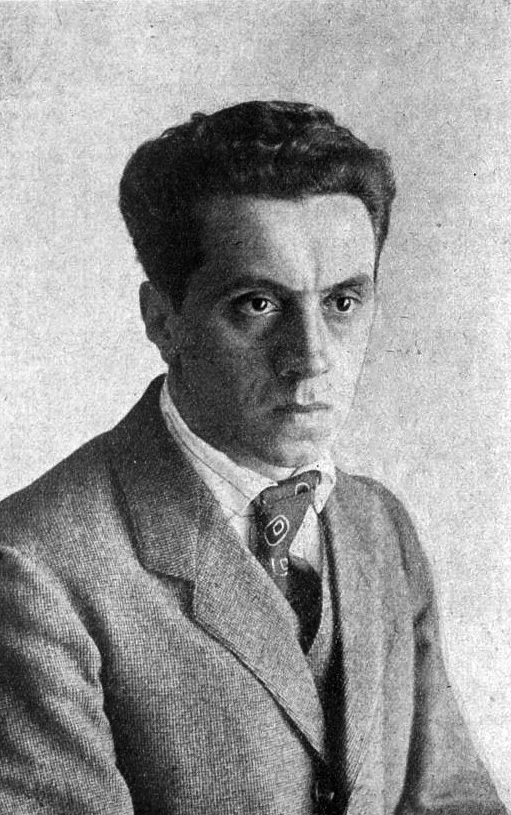
Image from Wikipedia
Image from Wikipedia
Ernst Toller – The Expressionist Who Merged Literature and Revolution
A Life Between War, Breakthrough, Prison, and Exile
Ernst Toller is considered one of the most prominent voices in German-language literature of the 20th century. As a playwright, poet, autobiographer, and political revolutionary, he embodied like few others the tensions of the Weimar Republic: hope for social renewal, the experience of war, the radicalization of politics, and the brutal suppression of emancipatory utopias. His biography is inextricably linked to his art, and this connection endows his work with an extraordinary intensity to this day. ([de.wikipedia.org](https://de.wikipedia.org/wiki/Ernst_Toller))
Toller was born on December 1, 1893, in Samotschin in the then Prussian province of Posen. He came from a Jewish merchant family, studied in Grenoble from 1914, and volunteered for military service after the outbreak of the First World War. The experience of war he encountered at the front became a biographical and intellectual turning point: the patriotically shaped young man transformed into a radical pacifist who translated the violence of his time into literary form. ([de.wikipedia.org](https://de.wikipedia.org/wiki/Ernst_Toller))
From War Experience to Expressionist Breakthrough
Toller's actual literary career began under the conditions of imprisonment. After his role in the Munich Soviet Republic, he was arrested in 1919, charged with high treason, and sentenced to five years in fortress imprisonment. This captivity became his most productive phase: in Niederschönenfeld, he created the plays that made him suddenly famous in the early Weimar Republic. His first drama Die Wandlung already marked an important beginning in 1919, but it was only works like Masse Mensch, Die Maschinenstürmer, and Hinkemann that established him as one of the central representatives of literary expressionism. ([de.wikipedia.org](https://de.wikipedia.org/wiki/Ernst_Toller))
The cultural significance of this phase cannot be overstated. Toller did not write about historical upheavals from a distance, but from the immediate experience of war, revolution, imprisonment, and political persecution. His language is characterized by urgency, moral intensity, and dramatic compression. The plays act as seismographic records of an era in which modern mass society, technological progress, and political violence mutually accelerated each other. ([britannica.com](https://www.britannica.com/biography/Ernst-Toller))
The Munich Soviet Republic and Political Radicalization
As a temporary chairman of the Bavarian USPD and a protagonist of the Munich Soviet Republic, Toller stood at the center of a historical state of emergency. The Soviet Republic was short-lived, but it made him a public figure of the first rank. After the suppression of the revolution, he became a symbolic target in a political conflict that extended far beyond Bavaria. His name became widely known across Germany in 1919, and the revolutionary became a political author with a European impact. ([britannica.com](https://www.britannica.com/biography/Ernst-Toller))
This political biography also shapes his literary authority. Toller wrote from the perspective of a man who believed in the potential for societal change while simultaneously witnessing the failure of revolutionary hopes. The works of the 1920s therefore reflect not only artistic but also historical movements: from the expressionist breakthrough to the sober analysis of modern violence, culminating in an increasingly serious, morally charged exile literature. ([de.wikipedia.org](https://de.wikipedia.org/wiki/Ernst_Toller))
Autobiography, Poetry, and the Self-Portrait of a Generation
In addition to drama, Toller also gained prominence as a poet and prose writer. Among his most successful works are the poetry cycle Das Schwalbenbuch and the autobiographical publication Eine Jugend in Deutschland. The latter is considered an intense self-testimony of an intellectual who describes the journey from a war volunteer to a pacifist, interpreting his own development as a generational experience. It is precisely this connection between personal memory and historical diagnosis that keeps the book relevant to this day. ([de.wikipedia.org](https://de.wikipedia.org/wiki/Ernst_Toller))
The history of reception also highlights Toller's stature. The Ernst Toller Society continues to dedicate itself to the edition, research, and dissemination of his work, including a critical edition of his works and letters. This scholarly infrastructure is a clear sign that Toller remains not only historically significant in literature but is also read as an author of lasting relevance. His work stands at the intersection of literature and politics, of expressionist form and ethical claims. ([ernst-toller.de](https://ernst-toller.de/en/about-us/?utm_source=openai))
Exile, Stigmatization, and the Final Years
In 1933, Toller initially emigrated to Switzerland and later to the USA. After the Nazi takeover, he was stripped of his citizenship due to his Jewish heritage and political stance; his works were among those defamed and burned in May 1933. This turned the prominent playwright into an author of exile, whose life path exemplifies the destruction of Weimar culture. ([de.wikipedia.org](https://de.wikipedia.org/wiki/Ernst_Toller))
In American exile, Toller’s psychological crisis deepened. The hope for opposing political forces gave way to resignation in the face of the advance of fascist movements. He died by suicide on May 22, 1939, in New York City at the age of 45. This tragic turning point adds an additional historical weight to his work: Toller’s writing remains the voice of a person who spoke against barbarism while foreseeing the coming catastrophe. ([britannica.com](https://www.britannica.com/biography/Ernst-Toller))
Style, Language, and Cultural Impact
Stylistically, Ernst Toller represents a highly condensed expressionist drama. His plays work with rhythmic intensification, moral confrontation, and a language that seeks existential urgency rather than psychological nuance. Theater, for him, becomes a political resonance space where individual guilt, collective violence, and the yearning for a more just society intersect. ([ernst-toller.de](https://ernst-toller.de/werk/?utm_source=openai))
Culturally, Toller continues to function as a symbolic figure for resistance, exile, and humanistic moralism. He has not been integrated into the classic canon of popular playwrights, but his life's work impresses with consistency and historical explosive power. Performances, awards, research projects, and memorial initiatives keep his presence alive in cultural memory. Those who read Toller encounter not just literature, but a radical diagnosis of the times. ([br.de](https://www.br.de/themen/kultur/inhalt/literatur/bayerische-schriftsteller-toller100.html?utm_source=openai))
Current Projects, Reception, and Cultural Memory Presence
Since Ernst Toller died in 1939, there have been no current artistic publications in the strict sense. Nevertheless, his presence remains remarkably active: The Ernst Toller Society continues to publish Schwalbenhefte, promote research, and keep his work in discussion through editions, conferences, and publications. In 2026, new contributions and book references also appeared on the society’s website, highlighting the ongoing relevance of his person and work. ([ernst-toller.de](https://ernst-toller.de/?utm_source=openai))
The reception combines scholarly rigor with cultural memory. Bibliographies, critical editions, and awards create a framework in which Toller is reread as a writer of political modernity. His dramas remain important documents of a century that was torn apart by conflicts between utopia and violence. This is where his lasting fascination lies: Toller does not write about history; he writes from its epicenter. ([ernst-toller.de](https://ernst-toller.de/en/about-us/?utm_source=openai))
Conclusion: An Author of Rare Force and Lasting Presence
Ernst Toller fascinates because his life and work form a rare unity. He was a revolutionary, pacifist, expressionist dramatist, and an uncomfortable contemporary witness of an era where political extremes and artistic avant-garde collided. Those who read his texts experience literature as a moral force, a historical document, and a linguistic compression of existential conflicts. For this reason, engaging with Toller is always worthwhile. ([de.wikipedia.org](https://de.wikipedia.org/wiki/Ernst_Toller))
He remains intriguing not because he offers a smooth hero's tale, but rather the drama of a generation caught between hope and disillusionment. Discovering his plays, poems, and autobiography reveals an author of immense intellectual tension and emotional depth. There is no longer a live experience in the classical sense with Ernst Toller—this makes the direct engagement with his texts, productions, and readings all the more worthwhile. ([br.de](https://www.br.de/themen/kultur/inhalt/literatur/bayerische-schriftsteller-toller100.html?utm_source=openai))
Official Channels of Ernst Toller:
- Instagram: No official profile found
- Facebook: No official profile found
- YouTube: No official profile found
- Spotify: No official profile found
- TikTok: No official profile found
Sources:
- Ernst Toller Society e.V. – Official Website
- Ernst Toller Society e.V. – Person
- Ernst Toller Society e.V. – Work
- Ernst Toller Society e.V. – About Us
- Ernst Toller Society e.V. – Schwalbenheft / Current Information
- Wikipedia – Ernst Toller
- Britannica – Ernst Toller
- NS Documentation Center Munich – Ernst Toller
- Cultural Foundation – Ernst Toller
- BR Culture – Ernst Toller, The Playwright as Revolutionary
- Wikipedia: Image and Text Source