Sustainable enjoyment in Schwerin: Organic, regional, fair
Sustainable enjoyment in Schwerin: Organic, regional, fair – Ideas for your next visit
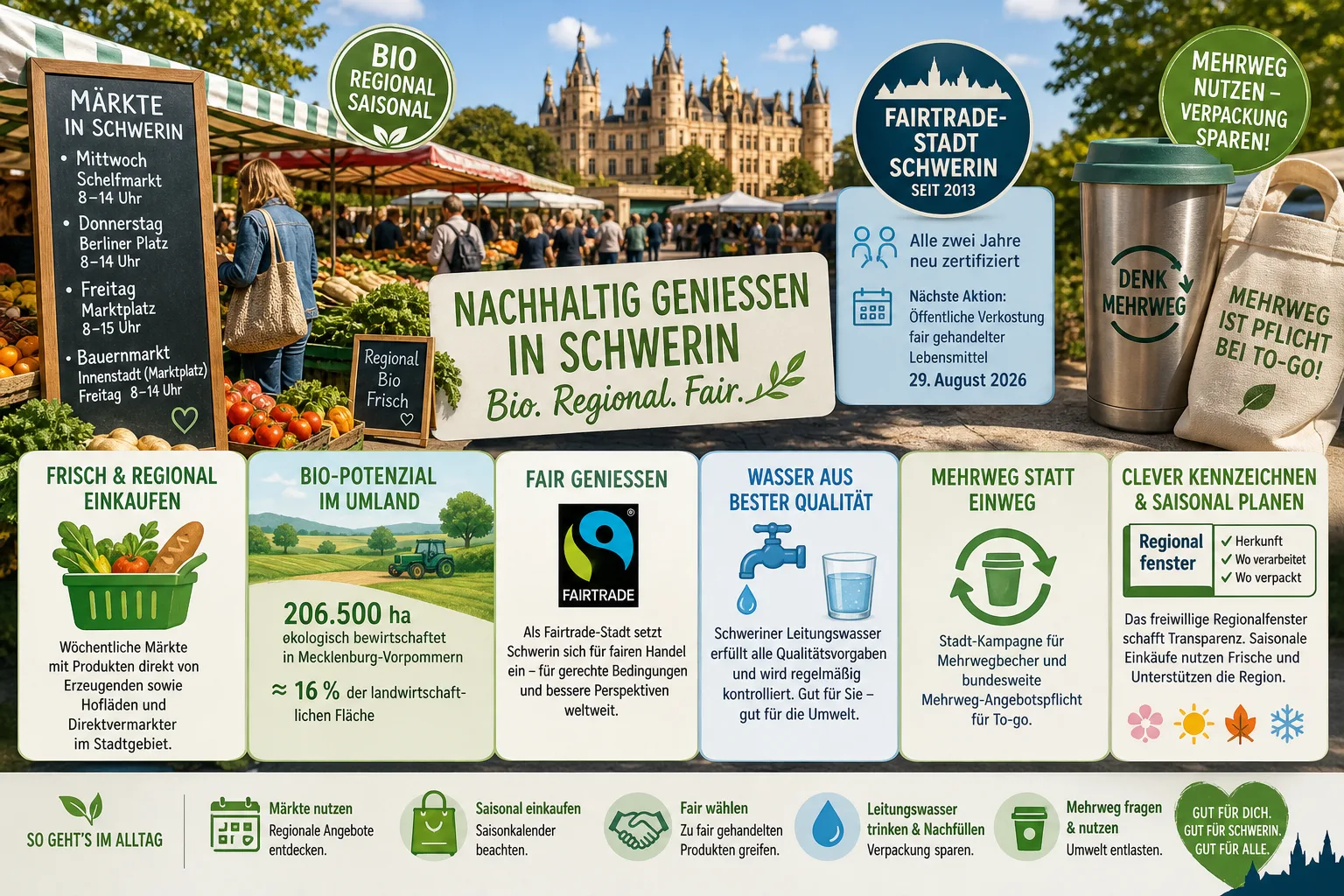
On your next market stroll in Schwerin, more can happen than just a full shopping basket: you can strengthen regional businesses, consciously choose fairly traded products, and reduce waste and transport effort with simple routines. This guide collects practical steps that you can implement on your next shopping trip, café visit, or city walk.
1) Weekly market & farmers' market: How to plan your next regional shopping trip
If you want to shop in Schwerin soon, the first step is to check the upcoming market dates (e.g., via city announcements or local notices). This way, you can consciously schedule your shopping for a market day and select directly from producers.
- For your next shopping trip: Bring a cloth bag, bread bag, and one or two containers for loose goods. This way, you can avoid packaging from the start.
- For more transparency: Ask at the stall about origin, cultivation methods, feeding, or processing. Especially at markets, you will often get these answers directly.
- For regional value creation: Try to buy “a complete meal” at the market (e.g., vegetables + eggs/cheese + bread). This way, a larger part of your budget goes into regional cycles.
If you are specifically looking for organic, you can look out for the usual organic labels (EU organic logo and possibly association logos) on your next visit and have the certification explained to you.
2) Enjoy fair: What you can specifically do on your next coffee or shopping trip
On your next café visit or when buying products like coffee, cocoa, tea, sugar, or chocolate, you can make “fair” very concrete: You consciously choose certified fair trade options and actively ask if there are several choices.
- In the café: For your next to-go drink, ask for a fair trade option (if offered) and combine it directly with reusable (your own cup or offered reusable cups).
- In the store: Set a “fair” basic set for your next shopping trip (e.g., coffee + chocolate). If you permanently switch these two products, your effect will be reliable – without having to reassess everything each time.
- During promotions and theme weeks: If tastings or promotional stands are announced in the coming months, use them as an opportunity to try new products instead of buying “on suspicion.”
Important for practice: Fair seals do not replace every detailed check, but they give you reliable guidance in everyday life when you need to decide quickly.
3) Combine organic & regional: How to find both on your next shopping trip
On your next shopping trip, you can most reliably combine organic and regional by taking two checking steps in succession:
- Check organic: Look for the EU organic logo and additional information (e.g., control number). This helps you classify ecological minimum standards.
- Check region: Look for clear origin information or labels that clearly indicate region and processing.
For packaged foods, the Regionalfenster can help: It shows (when used) transparently where the main ingredients come from and where they were processed. This is especially practical for your next supermarket or organic store visit if you don't want to research every product in detail.
4) Tap water & reusable: Two steps you will notice starting tomorrow
In the coming days, you can try one of the simplest routine changes: plan tap water as your standard drink and consistently use reusable when on the go. In Germany, requirements for drinking water will continue to be regulated by the Drinking Water Ordinance and monitored accordingly – this is the basis for considering tap water as an everyday option.
How to implement this on your next city walk
- Before leaving: Fill a reusable bottle (stainless steel or glass) and take it with you visibly – this reduces spontaneous purchases of single-use bottles.
- On the go: Plan short “refill” stops (e.g., in restaurants if refilling is possible there, or at public drinking fountains, if available and signposted).
- Smarter to-go: Use a reusable option offered at your next snack visit or ask for it if you don't see it right away. Additionally, you can bring your own container if the business accepts it hygienically.
If you stick to these two routines (bottle + reusable to-go) for two weeks, sustainability becomes measurable: less packaging, less lugging, fewer spontaneous single-use purchases.
5) Season & labeling: Your plan for the next shopping trip without guesswork
For your next shopping trip, you can set a simple decision order that works in a few seconds:
- What is currently in season? Use a seasonal calendar before shopping (digital or printed). This increases the chance of shorter distances and good freshness.
- What is regionally traceable? For packaged goods, look for clear origin information or the Regionalfenster (if available).
- What is fair if it is typically imported? For coffee, cocoa & co., prioritize fair certified products.
For your next dessert or breakfast, this means in practice: You first choose what fits the season well, and then supplement with fair import products where regionality is naturally hardly possible.
6) Mini-checklist: How to achieve sustainable enjoyment on your next Schwerin day
- Preparation: Pack a cloth bag, bread bag, 1–2 containers, cutlery (optional).
- Plan: Schedule a market day or store visit so you can cook fresh.
- Decision: Season first, then regionally traceable, then fair for import products.
- Beverages: Refill your bottle instead of buying single-use.
- To-go: Actively request or use reusable options.
If you consciously go through this on your next visit, a routine will quickly develop that doesn't feel like sacrifice, but like better organization – and often better taste.