
Angela Merkel
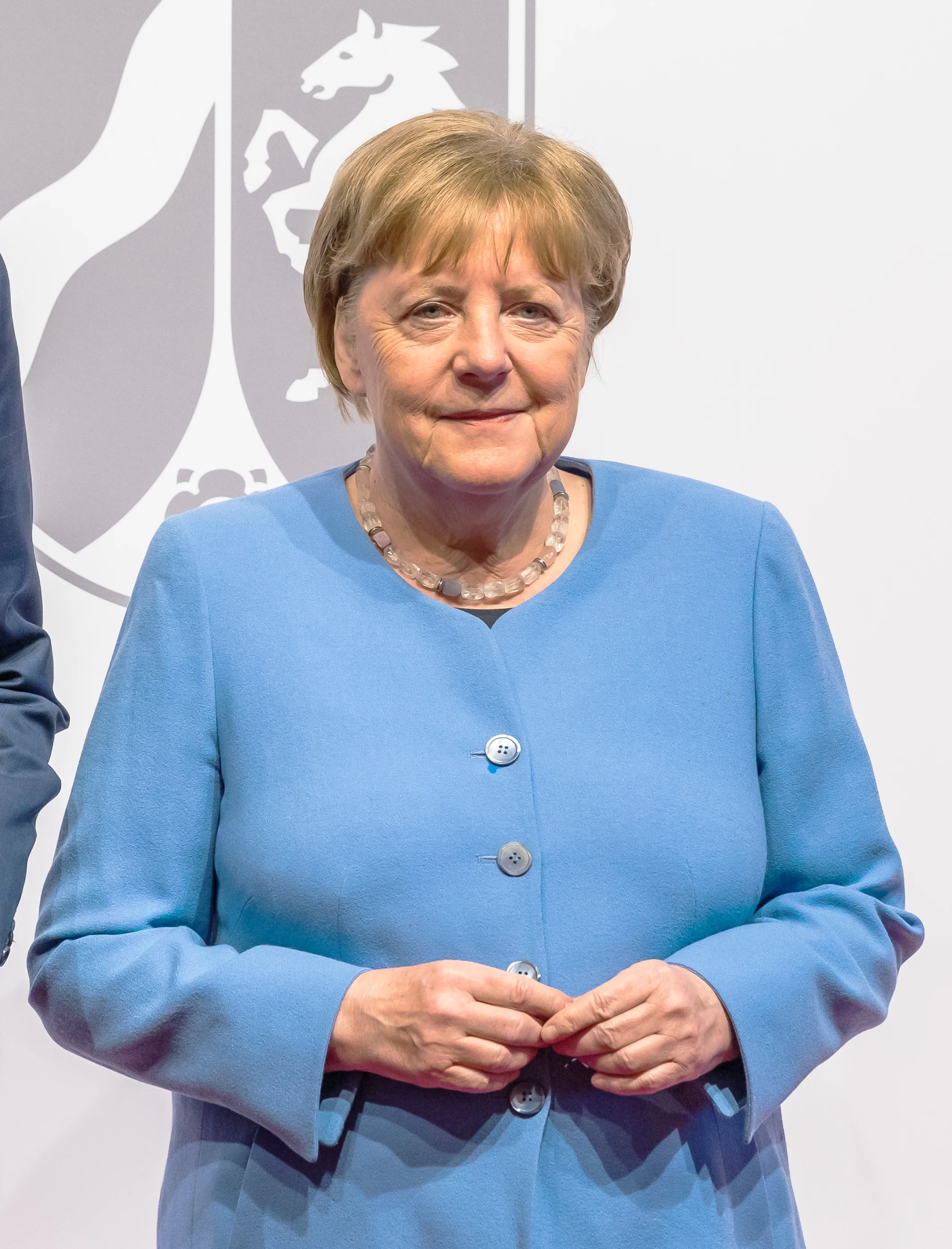
Image from Wikipedia
Image from Wikipedia
Angela Merkel – The Defining Figure of Contemporary German Politics
A Biography Between the GDR, Reunification, and 16 Years as Chancellor
Angela Dorothea Merkel is one of the most influential political figures in recent German history. Born on July 17, 1954, in Hamburg and raised in the GDR, she rose from a doctorate-holding physicist to become the first female Chancellor of the Federal Republic of Germany. Her tenure from 2005 to 2021 marked an era characterized by crisis management, European integration, and domestic political stability as the central themes of her administration. ([bundeskanzler.de](https://www.bundeskanzler.de/bk-de/kanzleramt/bundeskanzler-seit-1949/lebenslauf-angela-merkel?utm_source=openai))
Early Years, Scientific Influence, and the Step into Politics
Merkel's path did not begin in the political spotlight but rather in the field of science. After studying physics, she worked at the Central Institute for Physical Chemistry and earned her doctorate in 1986; this analytical, pragmatic mindset later influenced her governing style. It was only during the time of the political transformation, starting in December 1989, that she emerged politically, engaging in the Democratic Awakening movement, which joined the CDU in 1990. Her early political role in the GDR government, where she served as deputy government spokesperson, quickly made her a figure of the historic transition. ([bundeskanzler.de](https://www.bundeskanzler.de/bk-de/kanzleramt/bundeskanzler-seit-1949/lebenslauf-angela-merkel?utm_source=openai))
Rise in the CDU: From Young Politician to Power Center
With her entry into the Bundestag in 1990, Merkel began her parliamentary career, which quickly gained prominence. As Federal Minister for Women and Youth and later for the Environment, Nature Conservation, and Nuclear Safety, she gathered government experience before becoming CDU Secretary General in 1998. Her position as party chair from 2000 and her role as Federal Chairwoman until 2018 made her the central strategic force of the Union. This rise was no coincidence but the result of discipline, tactical patience, and an exceptional sense of majorities. ([bundeskanzler.de](https://www.bundeskanzler.de/bk-de/kanzleramt/bundeskanzler-seit-1949/lebenslauf-angela-merkel?utm_source=openai))
Chancellorship: Crisis Management, Continuity, and European Authority
After the Bundestag elections in 2005, Merkel assumed the office of Chancellor, succeeding Gerhard Schröder. She led four cabinets, governing with the SPD, the FDP, and again with the SPD, as she navigated Germany through financial crises, the euro crisis, refugee policy, and complex European negotiations. Her tenure is considered by many observers to exemplify pragmatic power techniques: rarely loud, often controlled, and mostly measured. This very blend granted her an international authority that extended far beyond Germany's borders. ([bundeskanzler.de](https://www.bundeskanzler.de/bk-de/kanzleramt/bundeskanzler-seit-1949/lebenslauf-angela-merkel?utm_source=openai))
Political Style: Pragmatism, Control, and the Image of the Chancellor
Merkel's political style was characterized over the years by rationality, resilience in crises, and an almost physical precision. The press often perceived her as a measured moderator, one who tends to organize rather than exacerbate conflicts. This particular power lay in her ability to provide stability in a phase of perpetual acceleration. At the same time, her media presence transformed her into a political icon, whose face and body language were just as closely analyzed as her decisions. ([deutschlandfunk.de](https://www.deutschlandfunk.de/angela-merkel-eine-bilanz-die-kanzlerin-und-die-medien-100.html?utm_source=openai))
Publications and Current Public Presence
Even after her chancellorship, Merkel remains a public voice with significant symbolic reach. Her memoirs, titled Freiheit: Erinnerungen 1954–2021, were published in 2024, tracing her life from childhood in the GDR to the end of her term. This publication once again highlighted her political biography and underscored how strongly her name is still linked to German contemporary history. The focus is not on a work of art in a musical sense but rather on a political achievement of extraordinary historical weight. ([de.wikipedia.org](https://de.wikipedia.org/wiki/Freiheit%3A_Erinnerungen_1954%E2%80%932021?utm_source=openai))
Discography? Why Angela Merkel as a Public Figure Should Be Read Differently
In the classical sense, Angela Merkel does not have a discography, no albums, no singles, and no chart positions. Nevertheless, there is a pronounced cultural reception surrounding her, reflected in books, portraits, documentaries, and satirical formats. Her name represents an entire era, which is why she is treated in media, pop culture, and political analysis as a national figure with her own "body of work." Those seeking musical successes will find no music history with Merkel, but rather a political history of extraordinary impact. ([de.wikipedia.org](https://de.wikipedia.org/wiki/Angela_Merkel?utm_source=openai))
Cultural Influence: The Merkel Era as a Term for a Political Time
Few other German politicians have so significantly shaped the language of the public sphere. Terms like "Merkel Era," "Crisis Manager," or "Mutti" demonstrate how deeply intertwined politics, media, and everyday culture can be. Merkel became a projection surface for hope, pragmatism, criticism, and a longing for order. This very ambivalence makes her cultural influence so remarkable: she is not only a former head of government but a symbol of German normalization, European responsibility, and political longevity. ([bpb.de](https://www.bpb.de/kurz-knapp/lexika/das-europalexikon/177131/merkel-angela/?utm_source=openai))
Reception in the Press and Public
The journalistic evaluation of Merkel has always fluctuated between admiration and skepticism. On one hand, she has been praised for her long-term stability, instinct for power, and ability to build majorities; on the other hand, commentators have occasionally criticized her hesitance and the perceived slowness of political decisions. This very range characterizes great public figures: they are not only managed but also narrated, interpreted, and constantly re-negotiated. Merkel thus remains one of the most interpreted personalities in post-war German history. ([bpb.de](https://www.bpb.de/kurz-knapp/lexika/das-europalexikon/177131/merkel-angela/?utm_source=openai))
Conclusion: A Woman Who Made German History Visible
Angela Merkel fascinates because she combined scientific precision with political durability, leading Germany through profound upheavals for 16 years. Her biography tells the story of the rise of a GDR physicist to the most powerful head of government in Europe and a political career that set benchmarks. Those interested in modern German history, power mechanisms, and political leadership will find in her one of the most significant figures of our time. Therefore, Angela Merkel remains a personality to be not only read but also historically understood. ([bundeskanzler.de](https://www.bundeskanzler.de/bk-de/kanzleramt/bundeskanzler-seit-1949/lebenslauf-angela-merkel?utm_source=openai))
Official Channels of Angela Merkel:
- Instagram: No official profile found
- Facebook: No official profile found
- YouTube: No official profile found
- Spotify: No official profile found
- TikTok: No official profile found
Sources:
Upcoming Events

Signing Session with Dr. Angela Merkel in Schwerin