
Christoph Möckel
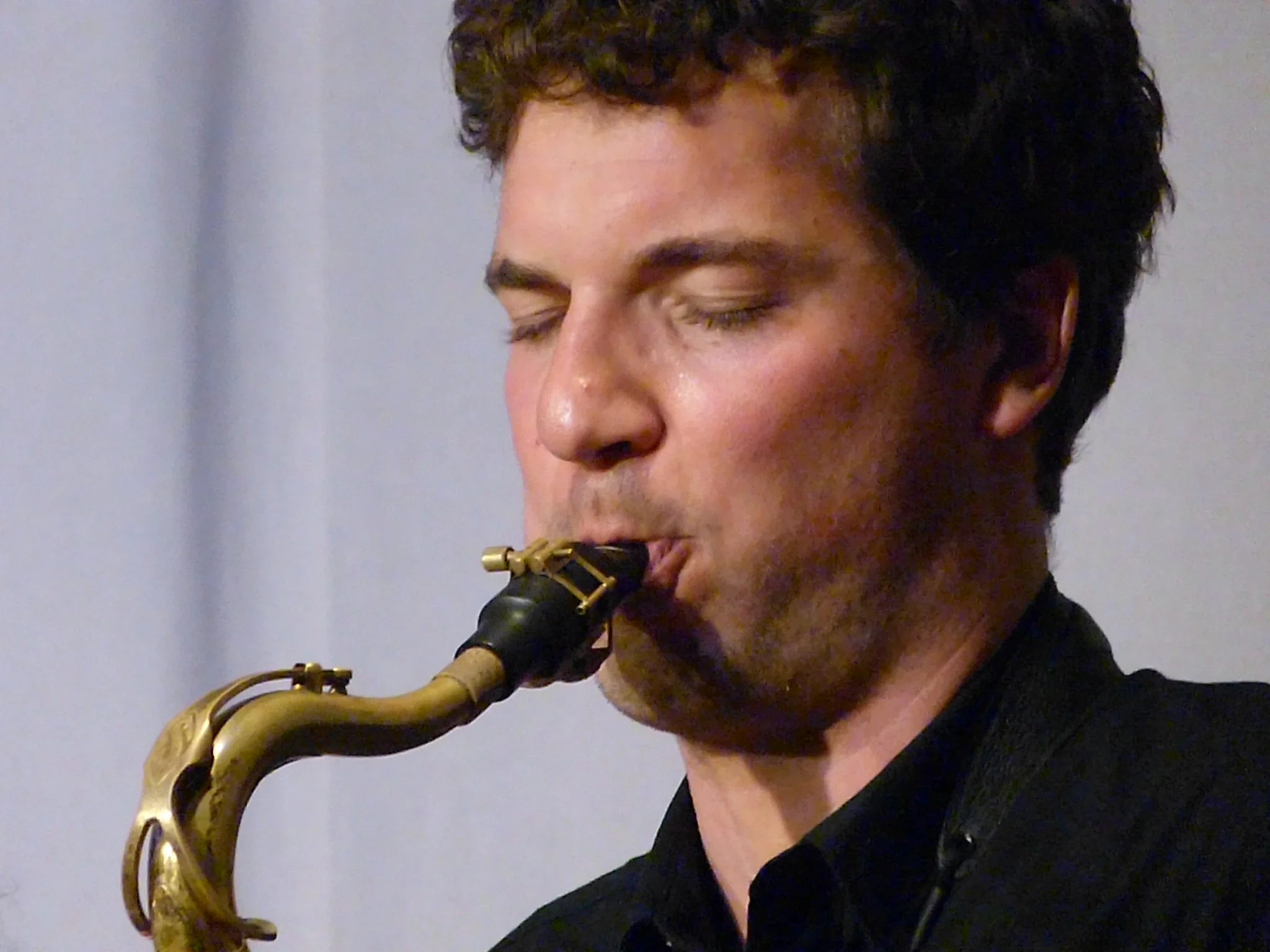
Image from Wikipedia
Image from Wikipedia
Christoph Möckel – Jazz between Lyrical Clarity and Modern Improvisation
A Musician Profile with Depth: Christoph Möckel in Portrait
Born in 1986 in Schwerin, Christoph Möckel is one of the prominent German jazz musicians of his generation. As a saxophonist and clarinetist, he combines technical prowess with a sensitive tone that has garnered attention in the German jazz scene for years. His artistic development is closely linked to a solid education, an early musical environment, and a remarkably broad concert and studio activity. ([de.wikipedia.org](https://de.wikipedia.org/wiki/Christoph_M%C3%B6ckel))
Early Influences and Musical Background
Möckel comes from a musical family; his father is the orchestra conductor Thomas Möckel. Even at the music gymnasium, his affinity for choir work and big band playing was evident, that is, to those musical areas where ensemble feel, timing, and sound culture are particularly important. This early influence explains why his later playing is not only virtuosic but also strongly oriented towards collective interaction. ([de.wikipedia.org](https://de.wikipedia.org/wiki/Christoph_M%C3%B6ckel))
The biography portrays an artist who does not understand music as an isolated solo art form but as a communicative craft. This is reflected in his later work in various jazz formations as well as in his roles as a lecturer and workshop leader. It is precisely in this combination of practice, pedagogy, and stage presence that the profile of a musician emerges who not only plays in the scene but also shapes it. ([de.wikipedia.org](https://de.wikipedia.org/wiki/Christoph_M%C3%B6ckel))
Education in Cologne: Craft Precision and Stylistic Openness
Between 2006 and 2011, Christoph Möckel studied saxophone at the Hochschule für Musik und Tanz Köln with Wolfgang Engstfeld, Claudius Valk, and Frank Gratkowski. This education was supplemented by workshops with Hayden Chisholm, Mark Turner, and Steve Coleman, artists representing different playing attitudes between melodic openness, structural thinking, and advanced jazz vocabulary. This mixture continues to shape Möckel's musical language today. ([de.wikipedia.org](https://de.wikipedia.org/wiki/Christoph_M%C3%B6ckel))
In 2011, he graduated with honors. This laid the foundation for a career that has grown not through loud self-promotion but through substance and continuity. In the German jazz landscape, this is often the difference between short-term presence and long-term relevance. ([christophmoeckel.com](https://www.christophmoeckel.com/vita/?utm_source=openai))
Career Path: From Ensemble Musician to Sought-After Soloist
In 2012, Christoph Möckel played in the European Jazz Orchestra, the Cologne Contemporary Jazz Orchestra, and in projects such as the Maxime Bender Orchestra and the Florian Ross Big Company. He has also been engaged in formations led by Oliver Lutz, Benjamin Garcia, and Sebastian Sternal. This broad ensemble experience shows a musician who remains stylistically flexible and acts convincingly in complex arrangements as well as in chamber music settings. ([de.wikipedia.org](https://de.wikipedia.org/wiki/Christoph_M%C3%B6ckel))
Since 2019, Möckel has been living in Berlin and has been entrusted with a teaching position for saxophone at the Hochschule für Musik und Theater Rostock since the winter semester of 2020. In parallel, he works as a workshop instructor, among others for the Landesjugendjazzorchester Mecklenburg-Vorpommern and the Young Academie Rostock. This connects artistic practice with knowledge transfer—an important quality marker in terms of musical authority. ([de.wikipedia.org](https://de.wikipedia.org/wiki/Christoph_M%C3%B6ckel))
Discography: Strong Band Projects and Sonic Independence
His discography does not showcase a narrow solo profile but rather a network of high-quality jazz productions. Key releases include Wandertrieb by Ebene Null, Signal with the Oliver Lutz Quartet, Dreamlike with his own quartet, Preen with the Offshore Quintet, Episoden by Holzig, as well as Mantra with the Christoph Möckel Trio. These recordings were released by labels such as Traumton Records, Unit Records, Klaeng Records, A-Jazz, and WismART. ([de.wikipedia.org](https://de.wikipedia.org/wiki/Christoph_M%C3%B6ckel))
It is especially notable how consistently Möckel returns in different settings: as a soloist with a warm, resonant tone, as part of finely balanced compositions, and as an improviser who treats structure not as a boundary but as a playground. His trio album Mantra from 2023 marks a current high point of his independent artistic work. ([de.wikipedia.org](https://de.wikipedia.org/wiki/Christoph_M%C3%B6ckel))
Current Projects: Trio, Collective, and New Jazz Spaces
According to his official biography, the EP Speed by his newly formed trio was released in 2021, followed by Mantra in 2023. On his concert page, Möckel continues to document a very active live presence with trio dates, collaborations, and projects such as "JONI," "Astoria," or the jazz collective MV. Additionally, the first "Node Jazzfest" in Schwerin is announced for 2026, which he co-initiated with other musicians. ([christophmoeckel.com](https://www.christophmoeckel.com/vita/?utm_source=openai))
These developments show an artist who does not dwell in the archive of a once-achieved success but continuously expands his repertoire. This is especially crucial in jazz: relevance arises through new formats, new line-ups, and the courage to constantly question familiar sound patterns. Möckel's work, as a result, remains contemporary, dynamic, and engaging. ([christophmoeckel.com](https://www.christophmoeckel.com/vita/?utm_source=openai))
Critical Reception and Cultural Context
The response to Christoph Möckel has been remarkably positive from the outset. The official biography quotes Deutschlandfunk, which assesses him as one of the "most promising young German saxophonists"; LondonJazz describes his sound aesthetics as unusual because he orients his sound towards the quieter saxophonists. Such voices place him in the tension between lyrical restraint and musical independence. ([christophmoeckel.com](https://www.christophmoeckel.com/vita/?utm_source=openai))
The awards also indicate early and sustainable recognition: he is a prizewinner at the national competition "Jugend jazzt" and "Jugend musiziert," as well as a recipient of the Convento Jazz Prize Nordrhein-Westfalen in 2010 and 2011, and finalist at the European Jazz Prize Burghausen and Leverkusen Jazz Days. Altogether, this paints a picture of a musician who has early on instilled trust in his artistic signature. ([de.wikipedia.org](https://de.wikipedia.org/wiki/Christoph_M%C3%B6ckel))
Style and Musical Language: Warm, Focused, Ensemble-Oriented
Möckel's playing combines clarity of tone with great sensitivity to form and dynamics. His work with the saxophone and bass clarinet shows a preference for register colors that are often perceived as particularly narrative in jazz. This sonic language unfolds with great impact, especially in smaller ensembles, as it mediates between melodic expression and improvisational density. ([christophmoeckel.com](https://www.christophmoeckel.com/disko/?utm_source=openai))
As a composer and ensemble member, Möckel operates within a jazz aesthetic that is neither flashy nor purely academic. He represents a contemporary German jazz that intertwines open forms, precise arrangements, and personal improvisation. This is precisely where his quality lies: he seeks not the superficial pose but the musically substantial statement. ([christophmoeckel.com](https://www.christophmoeckel.com/disko/?utm_source=openai))
Authority in the Scene: Stage, Teaching, and Collaboration
His authority stems not only from recordings but also from presence. Möckel has performed at festivals and series such as Jazzahead Bremen, Athens Jazz Festival, Jazz Open Hamburg, Bonn Jazzfest, WDR Jazzfest Cologne, the International Jazz Week Burghausen, and the Autumn Leaves Jazz Festival Luxembourg. Additionally, he has participated in radio and television productions for NDR, WDR, BR, SR, ARD, ZDF, and ARTE. This underscores the reach of an artist whose work holds relevance across different media and contexts. ([christophmoeckel.com](https://www.christophmoeckel.com/vita/?utm_source=openai))
Equally important is his work in teaching and workshops. Those who teach at universities, youth orchestras, and improvisation-oriented formats not only articulate knowledge but also shape the next generation. Christoph Möckel thus embodies a concept of jazz that combines artistic practice with pedagogical responsibility. ([christophmoeckel.com](https://www.christophmoeckel.com/vita/?utm_source=openai))
Conclusion: Why Christoph Möckel Remains Exciting
Christoph Möckel impresses as a musician with attitude, sound awareness, and stylistic discipline. His career showcases the rare combination of excellent education, enduring ensemble practice, and his own artistic signature. Anyone wishing to experience modern German jazz with substance, warmth, and intelligent improvisation should listen to Christoph Möckel live—this is where the full depth of his musical career unfolds. ([christophmoeckel.com](https://www.christophmoeckel.com/vita/?utm_source=openai))
Official Channels of Christoph Möckel:
- Instagram: No official profile found
- Facebook: No official profile found
- YouTube: No official profile found
- Spotify: No official profile found
- TikTok: No official profile found
Sources:
Upcoming Events
Christoph Möckel & Constantin Krahmer: Jazz in the City – Urban Vibes