
H. C. Artmann
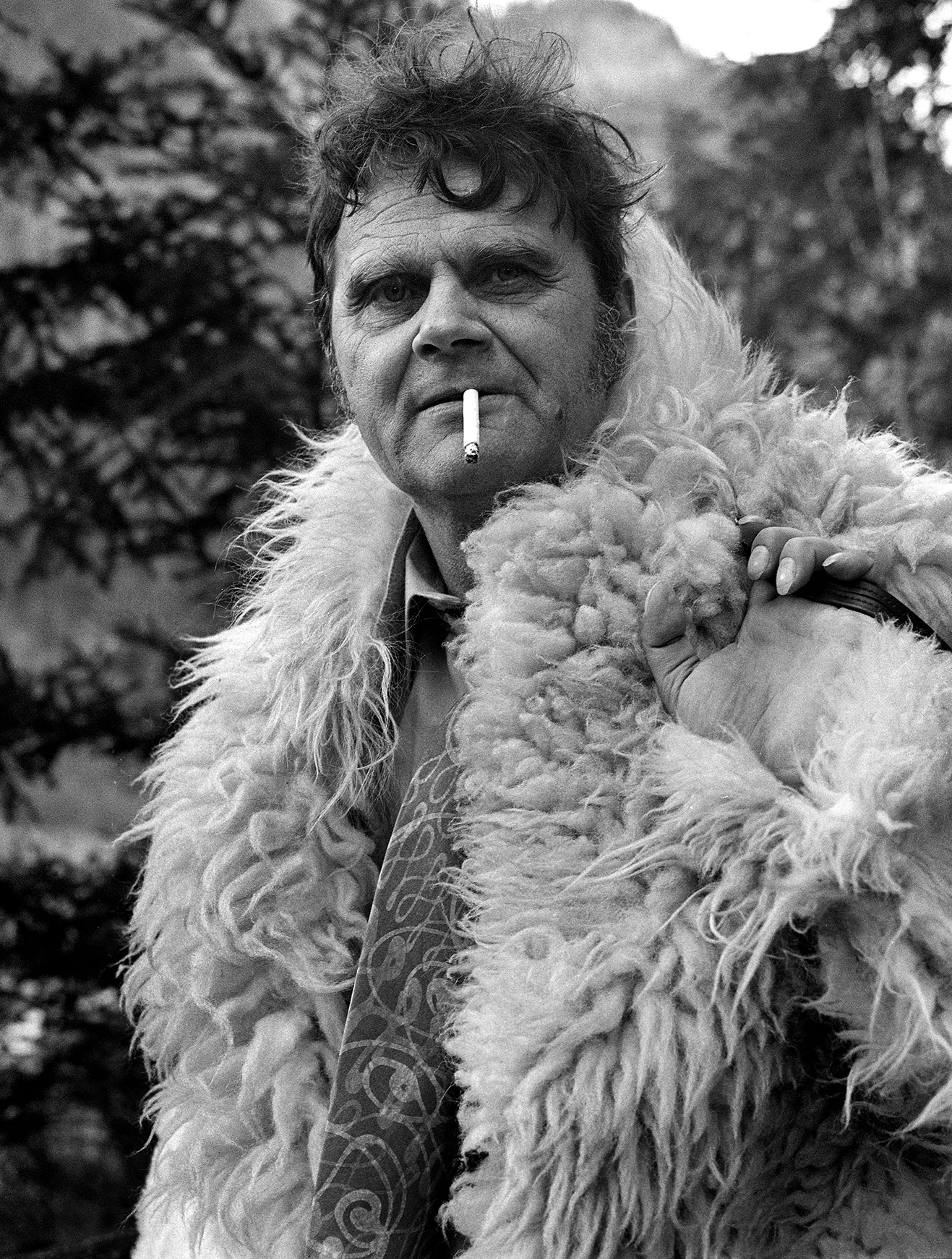
Image from Wikipedia
Image from Wikipedia
H. C. Artmann – The Great Language Magician of Austrian Literature
A Poet Between Dialect, Cosmopolitanism, and Literary Revolt
H. C. Artmann is one of the most idiosyncratic and influential voices in post-war Austrian literature. Born on June 12, 1921, in Vienna-Breitensee and passing away on December 4, 2000, in Vienna, he evolved from a linguistically gifted outsider to a celebrated lyricist, writer, and translator. His career represents a literary music culture of the language: rhythm, sound, style, and montage continue to shape his works to this day. ([sfd.at](https://sfd.at/lehren-und-lernen/faculty/h.c-artmann?utm_source=openai))
Biographical Roots: Vienna-Breitensee, War, and First Literary Steps
Artmann grew up in Vienna-Breitensee as the son of a shoemaker and did not leave school with academic honors but armed with experience, keen observation, and an early, exceptional sense of language. After attending elementary and secondary school, he first worked as an office intern and began an apprenticeship as a shoemaker, before being shaped by World War II: drafted into the Wehrmacht in 1940, wounded in 1941, and later taken prisoner by the Americans in 1945. These biographical disruptions shaped the perspective from which his later literature derived its tension between everyday life, irony, and existential feeling. ([sfd.at](https://sfd.at/lehren-und-lernen/faculty/h.c-artmann?utm_source=openai))
As early as the late 1940s, Artmann began to emerge literarily. In 1947, he published his first lyrical work on Radio Wien, followed by activities surrounding the magazine "neue wege" and the "Art Club." It soon became evident that Artmann was not a conventional author figure but a language-conscious experimenter who worked with tonalities, dialects, and literary masks. The Viennese literary scene in the post-war period found in him a colorful figure who transformed language into an event. ([sfd.at](https://sfd.at/lehren-und-lernen/faculty/h.c-artmann?utm_source=openai))
The Vienna Group: Avant-Garde as an Artistic Attitude
Since 1953, Artmann was in close contact with Konrad Bayer and Gerhard Rühm; this led to the formation of the so-called Vienna Group. This constellation marked one of the most radical literary formations in the German-speaking world, where language fragmentation, sound poetry, language play, and formal experiments converged. Artmann was not merely a follower, but a significant catalyst with a distinctive signature. His contribution lay in connecting folk proximity and avant-garde, dialect poetry and aesthetic boldness. ([sfd.at](https://sfd.at/lehren-und-lernen/faculty/h.c-artmann?utm_source=openai))
The Vienna Group firmly established Artmann in literary history as an author who understood the poem not as a quiet construct but as a linguistic phenomenon. This attitude made him particularly attractive to later generations: he opened literature to play, sound, performance, and a way of thinking beyond classical narrative and poetic forms. As a result, his work gained an authority that extended far beyond Austria. ([deutsche-biographie.de](https://www.deutsche-biographie.de/dbo005036.html?utm_source=openai))
The Breakthrough: “med ana schwoazzn dintn” and the Power of Dialect
In 1958, “med ana schwoazzn dintn” was published, the first collection of poems that made Artmann famous and brought dialect poetry to prominence. The work is considered his greatest commercial success and a key text of Austrian post-war literature. Crucial is not only the language but the attitude: Artmann took dialect not as folklore, but as a poetic instrument with its own dignity, musicality, and expressive power. ([de.wikipedia.org](https://de.wikipedia.org/wiki/H._C._Artmann?utm_source=openai))
In this collection, his art of condensation is particularly evident. Artmann works with sonorities, speech melodies, and idiomatic precision, without romanticizing the dialect. His texts sound both immediate and artfully crafted, as if born from oral tradition yet meticulously constructed. This makes him a key figure in the literature that transforms regional language into international modernity. ([de.wikipedia.org](https://de.wikipedia.org/wiki/H._C._Artmann?utm_source=openai))
Travel, Translations, and International Horizons
After 1954, Artmann traveled extensively throughout Europe; stays in Sweden, later in Berlin, Lund, Malmö, Graz, and Salzburg, shaped his life and texts. This mobility was not merely a biographical detail but part of his artistic development: Artmann wrote from a place of movement, distance, and careful observation. His literary world remained open, polyglot, and marked by cultural transitions. ([sfd.at](https://sfd.at/lehren-und-lernen/faculty/h.c-artmann?utm_source=openai))
As a translator, he also developed considerable authority. In Sweden, he translated, among others, Carl von Linné’s “Iter Lapponicum” and a selection of songs by Carl Michael Bellman titled “Der Lieb zu gefallen.” This work demonstrates his sensitivity to historical language, musical text forms, and the art of transforming foreign voices into his own aesthetic language. Artmann was therefore not only a poet but also a mediator of European literary traditions. ([deutsche-biographie.de](https://www.deutsche-biographie.de/dbo005036.html?utm_source=openai))
Works, Awards, and Literary Recognition
Since 1947, Artmann published poems, plays, and prose. His life included extended stays in Stockholm, Lund, Berlin, Malmö, Bern, and Graz, before he lived primarily in Salzburg and Vienna from 1972 onwards. His literary presence was confirmed by numerous awards, including the Georg-Büchner-Prize in 1997. His classification as one of the great Austrian authors of the 20th century is ensured by his impact, linguistic inventiveness, and lasting relevance. ([residenzverlag.com](https://www.residenzverlag.com/en/autor/h-c-artmann?utm_source=openai))
Artmann was honored as a member of the Academy of Arts in Berlin and received an honorary doctorate from the Paris Lodron University of Salzburg. Such awards mark not only late recognition but also the institutional anchoring of an author who was long regarded as an eccentric outsider. It is precisely this tension between marginality and canonical power that makes his biography so fascinating. ([sfd.at](https://sfd.at/lehren-und-lernen/faculty/h.c-artmann?utm_source=openai))
Style, Sound, and Cultural Influence
Artmann’s style thrives on transformation, irony, and precise rhythm. His work combines lyrical elegance with linguistic wit, dialect with high language, play with seriousness. This mixture made him influential in Austrian and German-language literature: He demonstrated that linguistic regionality is not a limitation but an aesthetic source. ([zeit.de](https://www.zeit.de/2000/50/H_C_Artmann?utm_source=openai))
His cultural influence reaches far into the present, as he conceptualized writing as a performative act. Artmann’s texts can almost be read like compositions: with bars, pauses, repetitions, and surprising turns. Moreover, the later reception in exhibitions, archives, and literary projects demonstrates that his work has not ossified into a museum piece, but continues to act as a vibrant part of Austrian cultural history. ([wienbibliothek.at](https://www.wienbibliothek.at/besuchen-entdecken/veranstaltungen-fuehrungen/recht-herzliche-gruesse-ende-welt-h-c-artmann-100-geburtstag?utm_source=openai))
Current Relevance and Legacy
Even after his death, Artmann remains present. The Vienna Library in the City Hall holds his estate and the legacy library, underscoring his ongoing significance for research and literary memory. In 2021, the Vienna Library dedicated an exhibition to his 100th birthday, focusing on Artmann's universe of travel and language. This illustrates that his work lives not only in editions but in the ongoing engagement with his artistic method. ([wienbibliothek.at](https://www.wienbibliothek.at/besuchen-entdecken/veranstaltungen-fuehrungen/recht-herzliche-gruesse-ende-welt-h-c-artmann-100-geburtstag?utm_source=openai))
In 2021 and the following years, Artmann was also made visible again in cultural projects and literary contexts, such as in discussions of his estate and events focused on his complete works. His texts remain engaging because they combine form consciousness, humor, and linguistic critique. Those who read Artmann encounter an author who not only utilizes language but thinks audibly. ([wienbibliothek.at](https://www.wienbibliothek.at/besuchen-entdecken/veranstaltungen-fuehrungen/recht-herzliche-gruesse-ende-welt-h-c-artmann-100-geburtstag?utm_source=openai))
Conclusion: Why H. C. Artmann Continues to Fascinate
H. C. Artmann is exciting because he liberated Austrian literature from the allure of convention. He combined dialect poetry, avant-garde, translation art, and international experience to create a distinctive body of work with a strong stage presence on the page. Those who appreciate literary radicalism, linguistic musicality, and intellectual independence will find in Artmann an author of enduring brilliance. His texts deserve to be read, heard, and rediscovered. ([de.wikipedia.org](https://de.wikipedia.org/wiki/H._C._Artmann?utm_source=openai))
Especially in the live sense, through readings, archives, and reinterpretations, Artmann unleashes the energy that has kept his literature so vibrant for decades. His work remains an invitation to all who want to experience language as an art form. H. C. Artmann is not an author of the past, but a constant effect of the present. ([wienbibliothek.at](https://www.wienbibliothek.at/besuchen-entdecken/veranstaltungen-fuehrungen/recht-herzliche-gruesse-ende-welt-h-c-artmann-100-geburtstag?utm_source=openai))
Official Channels of H. C. Artmann:
- Instagram: No official profile found
- Facebook: No official profile found
- YouTube: No official profile found
- Spotify: No official profile found
- TikTok: No official profile found
Sources:
- Wikipedia – H. C. Artmann
- Residenz Verlag – H.C. Artmann
- Deutsche Biographie – Artmann, H.(ans) C.(arl)
- Schule für Dichtung – H. C. Artmann
- Vienna Library in City Hall – H. C. Artmann on His 100th Birthday
- Vienna Library in City Hall – Manuscript Collection and Legacy Directory
- Die Presse – H.C. Artmann as a Musical Collage