
Judith Schalansky
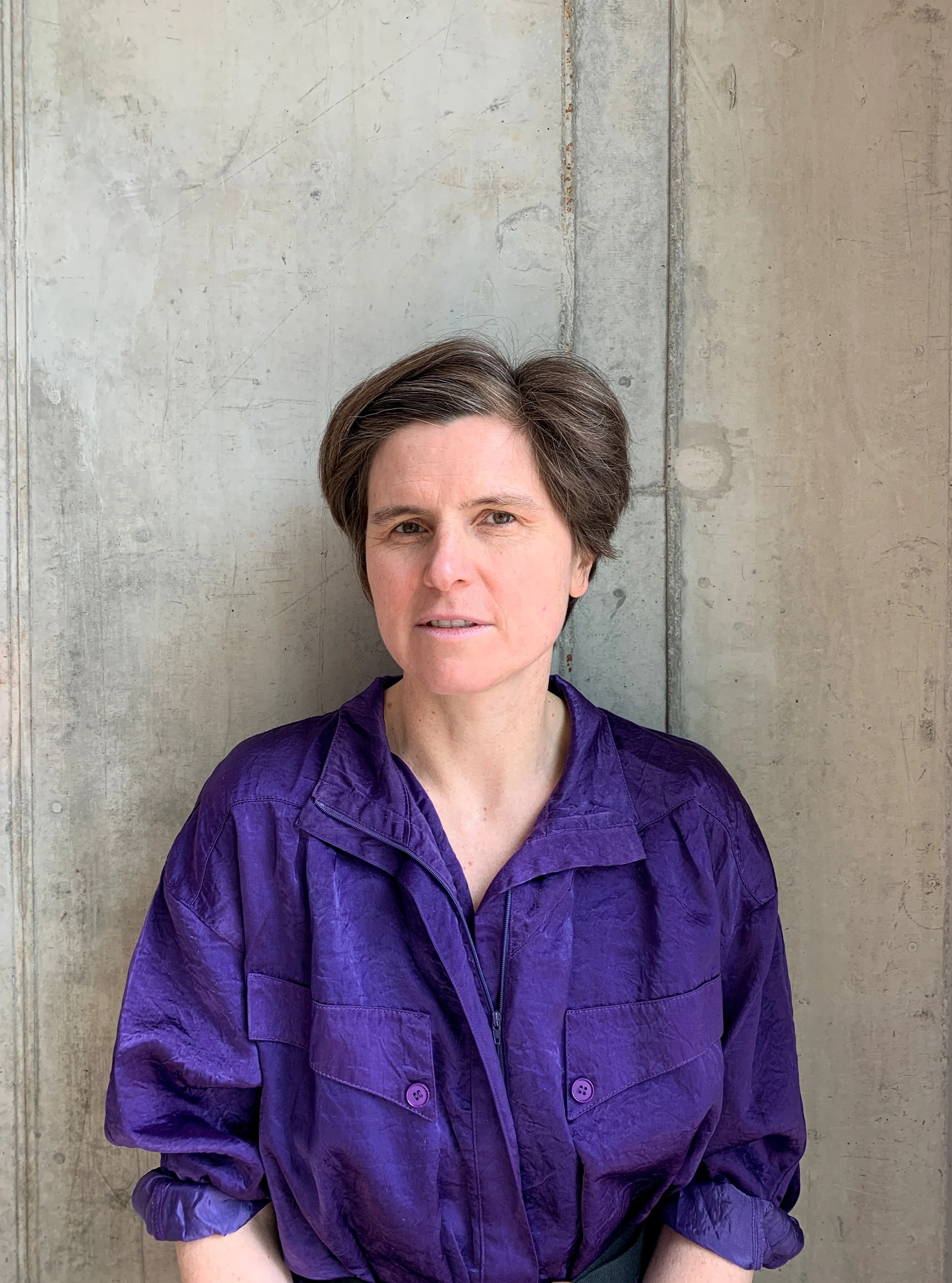
Image from Wikipedia
Image from Wikipedia
Judith Schalansky – the author, book designer, and editor with a distinctive visual language
A literary voice between precision, design, and great narrative depth
Judith Schalansky, born on September 20, 1980, in Greifswald, is one of the most prominent German authors of her generation. She works as a writer, book designer, and editor, combining literary reflection with a strong aesthetic sensitivity towards the book as an object. Her work spans essays, stories, novels, and editorial practice, establishing itself over the years as a distinctive, highly recognizable artistic position. ([suhrkamp.de](https://www.suhrkamp.de/person/judith-schalansky-p-8197?utm_source=openai))
Biography: Background, education, and the path to literature
Schalansky studied art history and communication design in Berlin and Potsdam. This dual influence remains central to her work today, as she never separates content from form but rather thinks of them as a unity. Early on, her interest in typographic precision, book design, and the question of how a text can be not only read but also visually and materially experienced became evident. ([munzinger.de](https://www.munzinger.de/register/portrait/biographien/schalansky%20judith/00/29910?utm_source=openai))
With her first book, Fraktur mon Amour, she drew attention in 2006, intertwining her fascination with type, typography, and cultural codes. This early success marked not merely an entry into the literary world but already the initiation of a comprehensive work that consistently integrates thinking about literature, image, and book culture. Schalansky's path, developed outside conventional literary routines, explains much of her unique position in the German-speaking literary scene today. ([munzinger.de](https://www.munzinger.de/register/portrait/biographien/schalansky%20judith/00/29910?utm_source=openai))
Career: The breakthrough with "Atlas of Remote Islands"
The international breakthrough came in 2009 with Atlas der abgelegenen Inseln, a work that uniquely intertwines geographical miniatures, cultural-historical observations, and poetic imagination. The book became a bestseller, received significant attention beyond the German-speaking world, and has been translated multiple times. It showcased Schalansky as an author who brings the seemingly peripheral to the center and creates literary tension from organized knowledge. ([deutschlandfunk.de](https://www.deutschlandfunk.de/die-schriftstellerin-und-buchgestalterin-judith-schalansky-100.html?utm_source=openai))
In 2011, she followed up with the novel Der Hals der Giraffe, in which she portrays the biology teacher Inge Lohmark in an East German school and life environment. The text has been read as a bitterly humorous Bildungsroman and praised for its elegance, precise language, and sharp observations of social and ideological conditions. With this book, Schalansky solidified her reputation as an author who combines intellectual complexity with narrative power. ([srf.ch](https://www.srf.ch/kultur/literatur/literatur-judith-schalansky-die-kunst-buecher-zu-schreiben-und-zu-gestalten?utm_source=openai))
The book as a space for thought
At the core of Schalansky's work is the question of how knowledge transitions into literature. Her books do not develop linear, easily resolvable narratives, but rather work with montage, argument, atmosphere, and formal sophistication. This is precisely where her authority lies: she demonstrates that literary quality emerges not through simplification but through condensation, structure, and aesthetic consistency. ([munzinger.de](https://www.munzinger.de/register/portrait/klg/schalansky%20judith/16/5027?utm_source=openai))
As an editor, she has also sharpened her profile. Particularly the series Naturkunden at Matthes & Seitz Berlin, for which she is responsible, connects nature and cultural history, highlighting the close relationship between scientific observation and essayistic form. Thus, Schalansky not only shapes her own books but also a whole editorial line with a clear cultural vision. ([matthes-seitz-berlin.de](https://www.matthes-seitz-berlin.de/autor/judith-schalansky.html?utm_source=openai))
Work and reception: Awards, recognition, and literary standing
For her work, Judith Schalansky has received numerous awards. Her books have been honored with the Stiftung Buchkunst Prize, and in 2014 she was awarded the Literature Houses Prize. In 2020, she also received the Christine Lavant Prize and in 2025 the Lessing Prize from the Hanseatic City of Hamburg. These honors underscore that her writing is perceived not as a fleeting phenomenon but as a lasting literary achievement. ([commons.wikimedia.org](https://commons.wikimedia.org/wiki/Category%3AJudith_Schalansky?utm_source=openai))
Reception consistently emphasizes the stylistic individuality of her texts. Critics highlight her controlled, clear language that does not smooth over complex content but shapes it precisely. Her position as a book designer is also regularly viewed as part of the overall work, as layout, materiality, and text form a rarely consistent unity. ([munzinger.de](https://www.munzinger.de/register/portrait/biographien/schalansky%20judith/00/29910?utm_source=openai))
Musical and broader cultural resonance
Though Judith Schalansky is not a musician, her work possesses a distinct rhythmic and compositional quality. Her texts often function like carefully arranged scores of knowledge, memory, and imagery, in which motifs recur, vary, and comment on one another. This strict form lends her writing a special cultural resonance. ([munzinger.de](https://www.munzinger.de/register/portrait/klg/schalansky%20judith/16/5027?utm_source=openai))
Her background from Greifswald and her engagement with the GDR and the post-reunification period shape many themes in her work, without reducing it to biographical self-exhibition. Instead, she transforms personal and historical experience into literary form. This connection of regional influence, intellectual distance, and poetic precision makes her author figures and narrative spaces distinctly recognizable. ([deutschlandfunkkultur.de](https://www.deutschlandfunkkultur.de/die-schriftstellerin-judith-schalansky-die-natur-schreibend-100.html?utm_source=openai))
Current projects: new book, new stage, new attention
In 2026, Marmor, Quecksilber, Nebel. Woraus die Welt gemacht ist was published by Suhrkamp, a new work consisting of three poetologically dense texts. The publisher describes the book as an exploration of the material conditions of life and writing, related to themes such as marble, sculpture, origin, and the relationship between reality and representation. The publication shows that Schalansky continues to work with great formal independence and consistently expands her oeuvre. ([suhrkamp.de](https://www.suhrkamp.de/buch/judith-schalansky-marmor-quecksilber-nebel-t-9783518432013?utm_source=openai))
Additionally, she has received public recognition through the Lessing Prize 2025 and numerous readings and presentations surrounding the new book. Thus, Schalansky remains present in literary discourse, not as a fleeting media figure but as an author with sustained attention and institutional recognition. Her contemporary literature appears both current and enduring. ([suhrkamp.de](https://www.suhrkamp.de/rights/nachricht/judith-schalansky-receives-the-lessing-prize-2025-b-4936?utm_source=openai))
Official channels of Judith Schalansky:
- Instagram: no official profile found
- Facebook: no official profile found
- YouTube: no official profile found
- Spotify: no official profile found
- TikTok: no official profile found
Conclusion: Why Judith Schalansky remains so exciting
Judith Schalansky is exciting because she combines literature, design, and intellectual curiosity into a rarely close artistic form. Her books are characterized by precision, thematic depth, and a distinctive sense of materiality. Those interested in sophisticated contemporary literature, book art, and culturally rich narrative forms will find in her an author of exceptional rank. ([munzinger.de](https://www.munzinger.de/register/portrait/biographien/schalansky%20judith/00/29910?utm_source=openai))
It is precisely the combination of analytical sharpness and poetic imagination that makes her work so vivid. Judith Schalansky is not read on the side but rather as an invitation to experience literature as a form of thought. Those who encounter her texts live will meet a voice that fills the space between knowledge, art, and language with great presence. ([deutschlandfunk.de](https://www.deutschlandfunk.de/die-schriftstellerin-und-buchgestalterin-judith-schalansky-100.html?utm_source=openai))
Sources:
- Wikipedia – Judith Schalansky
- Suhrkamp Verlag – Judith Schalansky
- Suhrkamp Verlag – Marmor, Quecksilber, Nebel
- Suhrkamp Verlag – Judith Schalansky receives the Lessing Prize 2025
- Matthes & Seitz Berlin – Judith Schalansky
- Deutschlandfunk – What does the author Judith Schalansky hear?
- Deutschlandfunk Kultur – Conquering nature through writing
- SRF Culture – The art of writing and designing books
- Wikipedia: Image and text source
Upcoming Events
Reading with Judith Schalansky
MARBLE, MERCURY, FOG. WHAT THE WORLD IS MADE OF – Reading with Judith Schalansky