
Marcel Duchamp
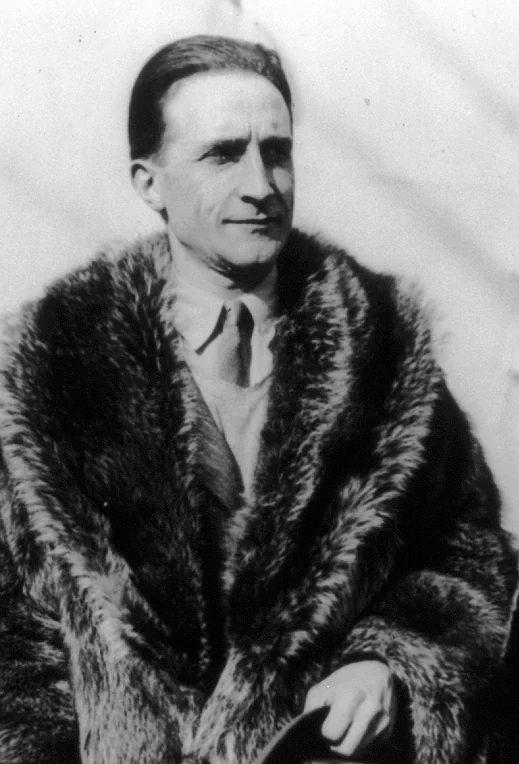
Image from Wikipedia
Image from Wikipedia
Marcel Duchamp: The Radical Renewed of Modern Art
An artist who rewrote the rules of art history
Marcel Duchamp is one of the most influential artists of the 20th century. Born in 1887 in Blainville-Crevon, this Frenchman evolved from a painter to an object artist, a thinker of conceptual art, and a provocateur who questioned the very definition of art. His biography connects French avant-garde, New York modernism, and an artistic attitude that still resonates today. ([en.wikipedia.org](https://en.wikipedia.org/wiki/Marcel_Duchamp?utm_source=openai))
From painter to avant-garde visionary
Duchamp's early career began in painting, influenced by his family's closeness to art and his search for a personal language of representation. MoMA describes how he initially created family portraits and impressionistically styled landscapes before moving increasingly away from classical painting. Even at this stage, his interest in movement, perception, and mental construction—rather than mere craftsmanship—was evident. ([moma.org](https://www.moma.org/artists/1634-marcel-duchamp?utm_source=openai))
His artistic breakthrough came not through conformity, but through rupture. With works like Nude Descending a Staircase, No. 2 and later the Readymades, Duchamp shifted the focus from the painted motif to the idea, the decision, and the contextual shift. The Philadelphia Museum of Art and MoMA emphasize that he thereby broke the boundaries of what could be considered art. ([philamuseum.org](https://www.philamuseum.org/exhibitions/marcel-duchamp?utm_source=openai))
Scandal as an aesthetic tool
Duchamp's radical strategy became most clear with Fountain, the famous urinal submitted for exhibition in 1917, later regarded as an icon of the New York Dada movement. The Philadelphia Museum of Art explains that the original was lost or destroyed after submission, and Duchamp later created replicas that helped the work gain widespread reception in the 1950s and 1960s. The actual coup lay not in the object itself, but in the shift of perspective: a commonplace object, chosen instead of crafted, became a conceptual emblem of modernity. ([philamuseum.org](https://www.philamuseum.org/objects/92488?utm_source=openai))
MoMA articulates this attitude as an attack on the notion that art consists merely of skilled craftsmanship. Duchamp spoke of a decision of the mind, not the cleverness of the hand, and developed an aesthetic of indifference, humor, and the devaluation of traditional authority. In this lies his historical explosive power: he made the act of selection itself an artistic medium. ([moma.org](https://www.moma.org/artists/1634-marcel-duchamp?utm_source=openai))
Between Dada, surrealism, and individual independence
Duchamp was associated with Cubism, Dada, and Surrealism, yet he refused any rigid categorization. MoMA describes him as an artist who continually moved between France and New York while cultivating an attitude that prioritized independence, irony, and intellectual elasticity. This mobility is not only biographical but also aesthetic: it reflects a career that was in constant reinvention. ([moma.org](https://www.moma.org/artists/1634-marcel-duchamp?utm_source=openai))
His central works include The Bride Stripped Bare by Her Bachelors, Even (The Large Glass), L.H.O.O.Q., Box in a Valise, and the later Étant donnés. The Philadelphia Museum of Art announces a major retrospective for 2026/2027 that will present these works as milestones of a career spanning over six decades. This will make visible how consistently Duchamp worked with painting, sculpture, film, photography, printmaking, and exhibition concepts. ([philamuseum.org](https://www.philamuseum.org/exhibitions/marcel-duchamp?utm_source=openai))
The art of thinking: Readymade, language, and play
Duchamp's work is characterized by intellectual precision and playful subversion. The Readymades are not mere provocations, but carefully placed interventions in perception, often accompanied by ironic titles, wordplay, and a calculated distance from sentimental pathos. MoMA highlights that these works elevated ordinary objects like urinals, bicycle wheels, or snow shovels to the status of high art. ([moma.org](https://www.moma.org/artists/1634-marcel-duchamp?utm_source=openai))
Even his later works show his methodical radicality. Étant donnés, the last major work that MoMA describes as a secretly developed late work, forces the viewer into a voyeuristic perspective, merging installation, stage, and psychological tension. Duchamp's art is thus not just a concept but also a staging, not only a thought but also a regime of vision. ([moma.org](https://www.moma.org/artists/1634-marcel-duchamp?utm_source=openai))
Current reception and ongoing presence
Even decades after his death, Duchamp remains a focal point of contemporary art. MoMA has announced a major retrospective for 2025, opening in April 2026, showcasing the range of his work over six decades; Philadelphia will follow with another presentation starting in October 2026, with a subsequent stop planned at the Grand Palais in Paris. This institutional attention demonstrates that Duchamp's work continues to serve as a touchstone for the question of what art can be. ([press.moma.org](https://press.moma.org/exhibition/marcel-duchamp/?utm_source=openai))
Even outside of traditional museum contexts, his influence remains present. A research and exhibition environment surrounding the Prix Marcel Duchamp keeps his name alive as a reference point in French contemporary art, and current writings in the art press continue to position him as a key figure of modernity. Duchamp is thus not only historically significant but also a lasting benchmark for conceptual thinking in art. ([slash-paris.com](https://slash-paris.com/en/articles/gaelle-choisne-l-ere-du-verseau-centre-pompidou?utm_source=openai))
Cultural influence: Why Duchamp resonates to this day
His influence extends far beyond classical art history. The Philadelphia Museum of Art describes how Fountain shaped subsequent generations of artists like John Cage and Robert Rauschenberg; MoMA, in turn, positions Duchamp as a central figure in a fundamental change in the concept of culture in the 20th century. From this perspective, Duchamp is not only an artist but also an architect of intellectual modernity. ([philamuseum.org](https://www.philamuseum.org/objects/92488?utm_source=openai))
He combined radicality with lightness, theory with wit, anti-aesthetics with formal rigor. This very mix makes his art equally exciting for museum visitors, art historians, and collectors. Those who engage with Duchamp's work encounter not just an artwork, but the birth of a mindset that has redrawn the boundaries between object, idea, and audience. ([moma.org](https://www.moma.org/artists/1634-marcel-duchamp?utm_source=openai))
Conclusion: The unfinishable artist of modernity
Marcel Duchamp remains captivating because he revolutionized art from within. He removed the uniqueness of the artisan gesture, elevated the intellectual act to the artistic main concern, and thus created an aesthetic that extends into the present. His career tells the story of a constant renewal, characterized by courage, contradiction, and intellectual precision. ([moma.org](https://www.moma.org/artists/1634-marcel-duchamp?utm_source=openai))
Experiencing his works in the museum means encountering not only icons of modernity but also an artist who forever changed the perspective on art. A visit to the major Duchamp exhibitions is worthwhile, as they showcase how vibrant, ironic, and intellectually sharp his artistic language has remained. Experiencing Duchamp live in the museum means tracing the birth of conceptual art within the space itself. ([press.moma.org](https://press.moma.org/exhibition/marcel-duchamp/?utm_source=openai))
Official channels of Marcel Duchamp:
- Instagram: no official profile found
- Facebook: no official profile found
- YouTube: no official profile found
- Spotify: no official profile found
- TikTok: no official profile found
Sources:
Upcoming Events
Public Tour: The Collection of Marcel Duchamp