
Maurice Duruflé
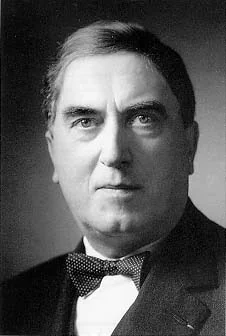
Image from Wikipedia
Image from Wikipedia
Maurice Duruflé – The Radiant Master of French Organ Sound
A composer of rare severity, quiet grandeur, and timeless impact
Maurice Duruflé, born on January 11, 1902 in Louviers and died on June 16, 1986, is among the most distinctive voices of French music in the 20th century. As an organist, composer, educator, and sensitive sound architect, he shaped the tradition of French organ art with a workshop of precision, humility, and stylistic consistency. His name is synonymous with a musical career focused not on quantity, but on the highest quality. ([universalis.fr](https://www.universalis.fr/encyclopedie/maurice-durufle/))
Early years in Louviers and Rouen: The origin of a musical worldview
Duruflé's musical upbringing began in Normandy, where Gregorian chant profoundly influenced him from a young age. His education at the Maîtrise Saint-Évode de Rouen and intensive engagement with liturgical music laid the foundation for his later work. This early phase already explains why his compositions often emerge from an inner contemplation: clear, composed, and spiritually charged. ([durand-salabert-eschig.com](https://www.durand-salabert-eschig.com/-/media/Images/DSE/PDFs/Brochures/D/durufle_maurice.ashx?hash=DA0526E1F5AB66DF4A5D50BF1FF7AB1CD681E2A5&la=fr-FR))
In 1919, Duruflé moved to Paris and studied under formative personalities such as Charles Tournemire, Louis Vierne, Eugène Gigout, Jean Gallon, Georges Caussade, and Paul Dukas. These years of study combined a rigorous counterpoint school with a deep understanding of timbre, mode, and liturgical form. From this connection, he developed a compositional style that does not merely quote tradition but refines it. ([universalis.fr](https://www.universalis.fr/encyclopedie/maurice-durufle/))
The organist as a stage artist: Paris, Notre-Dame, and Saint-Étienne-du-Mont
Duruflé’s career as an organist took him to central places of French church music. He was an assistant to Charles Tournemire at Sainte-Clotilde, later a deputy to Louis Vierne at Notre-Dame de Paris, and from 1930 until his death, the titular organist at Saint-Étienne-du-Mont in Paris. These roles established him as an authority in the culture of the organ and a formative figure of the French school. ([durand-salabert-eschig.com](https://www.durand-salabert-eschig.com/-/media/Images/DSE/PDFs/Brochures/D/durufle_maurice.ashx?hash=DA0526E1F5AB66DF4A5D50BF1FF7AB1CD681E2A5&la=fr-FR))
As an interpreter, Duruflé was also in high demand internationally. IRCAM highlights that he was extraordinarily famous in the United States, where he completed numerous concert tours. His stage presence was based on technical control, tonal discipline, and a stylistic seriousness that aimed not for effects but for depth. ([ressources.ircam.fr](https://ressources.ircam.fr/fr/composer/maurice-durufle/biography))
The compositions: Small output, great impact
Duruflé published only a small portion of his work; Universalis describes an extremely slim but highly refined œuvre. His pieces were repeatedly revised, refined, and retracted until they matched his own vision of balance and expression. This self-criticism became a hallmark of his artistic development. ([universalis.fr](https://www.universalis.fr/encyclopedie/maurice-durufle/))
Among the most significant organ works are the Prélude, adagio et choral varié sur le thème du Veni Creator op. 4, the Suite op. 5, and the Prélude et fugue sur le nom d’Alain op. 7. In the vocal domain, the Requiem op. 9 stands out, premiered in 1947 and long considered core repertoire of sacred music. Additionally, the Quatre Motets sur des thèmes grégoriens and the Messe “Cum jubilo” showcase Duruflé's ability to transpose Gregorian melodies into modern harmonies. ([universalis.fr](https://www.universalis.fr/encyclopedie/maurice-durufle/))
Style and language: Gregorian chant, modality, and French elegance
Duruflé's style is deeply rooted in Gregorian chant. The Durand-Salabert-Eschig material emphasizes that he was shaped by plainchant since childhood and understood medieval modality as a vibrant sonic language. His music blends monodic clarity with complex polyphony and subtle harmony; this is where its special tension lies. ([durand-salabert-eschig.com](https://www.durand-salabert-eschig.com/-/media/Images/DSE/PDFs/Brochures/D/durufle_maurice.ashx?hash=DA0526E1F5AB66DF4A5D50BF1FF7AB1CD681E2A5&la=fr-FR))
AllMusic describes his works as grounded in Gregorian influences, with melodies embedded in complex modal harmonies. Universalis adds that his aesthetic consciously maintained a distance from radical new compositional techniques without appearing regressive. Rather, Duruflé developed an uncompromising tonal language that unites tradition, piety, and technical refinement at the highest level. ([open.spotify.com](https://open.spotify.com/artist/7Fph7U6qidZ2E97xKKsD4m?utm_source=openai))
Discography and reception: The Requiem as a global heritage
The discography surrounding Duruflé is strongly characterized by recordings of his Requiem and his organ works. Spotify lists the piece as one of the most popular titles in his catalog; alongside the Requiem, Ubi caritas and other choral-inspired works appear as frequently heard repertoire anchors. This shows how present Duruflé's music has remained in today's concert and streaming activities. ([open.spotify.com](https://open.spotify.com/artist/7Fph7U6qidZ2E97xKKsD4m?utm_source=openai))
The critical reception over the decades has been remarkably consistent: Duruflé is regarded as a master of delicacy, sonic economy, and spiritual depth. IRCAM describes the Requiem as performed worldwide and highlights the expressive power of his other works. Additionally, publishing and archival sources emphasize the high originality of his few but exceptionally carefully crafted works. ([ressources.ircam.fr](https://ressources.ircam.fr/fr/composer/maurice-durufle/biography))
Teacher, authority, and cultural influence
Duruflé was not only an interpreter and composer but also an influential teacher. He taught as a professor at the Paris Conservatory and shaped several generations of significant organists. This made him a key figure in the French organ tradition, whose impact extends far beyond his own repertoire. ([universalis.fr](https://www.universalis.fr/encyclopedie/maurice-durufle/))
His cultural influence is still evident today in concerts, memorial programs, and international performances. The Association Maurice & Marie-Madeleine Duruflé documents a lasting presence of his work in France, Europe, and beyond; in spring 2026, for example, his repertoire was highlighted in several cities and countries. This confirms that Duruflé not only made music history but also remains alive. ([durufle.fr](https://www.durufle.fr/page/2460947-actualite))
Current projects and publications related to Duruflé's work
As a deceased composer, Maurice Duruflé no longer releases new albums or singles. Current activities primarily involve performances, rediscoveries, and the preservation of his legacy through the Duruflé Association as well as concert organizers and performers in 2025 and 2026. Notably, continued interest in his Requiem and his organ works remains highly visible. ([durufle.fr](https://www.durufle.fr/page/2460947-actualite))
This persistent presence underscores the relevance of his œuvre. Duruflé's music does not thrive on media noise but on its ability to resonate even in new contexts – from the cathedral to the concert hall. Those who listen to his music encounter an artistic approach that takes every detail seriously while still opening up vast emotional expanses. ([ressources.ircam.fr](https://ressources.ircam.fr/fr/composer/maurice-durufle/biography))
Conclusion: A quiet giant of French music
Maurice Duruflé fascinates because he sought the essence of expression and avoided any superfluous gestures. His music is intellectually concentrated, sonically precious, and historically deeply rooted without ever appearing museum-like. Anyone wanting to experience French organ art, sacred vocal music, and exquisite compositional craftsmanship will find Duruflé an indispensable name. ([universalis.fr](https://www.universalis.fr/encyclopedie/maurice-durufle/))
His work invites not just listening, but true experiencing. The Requiem and the organ works unfold their full power especially live, in spaces with resonance, breath, and a sacred aura. Therefore, Maurice Duruflé remains an artist who should not only be known but continually re-experienced. ([open.spotify.com](https://open.spotify.com/artist/7Fph7U6qidZ2E97xKKsD4m?utm_source=openai))
Official channels of Maurice Duruflé:
- Instagram: No official profile found
- Facebook: No official profile found
- YouTube: No official profile found
- Spotify: No official profile found
- TikTok: No official profile found
Sources:
- IRCAM – Biography of Maurice Duruflé
- Encyclopédie Universalis – Maurice Duruflé
- Durand-Salabert-Eschig – Maurice Duruflé Biography and Catalog of Works
- Spotify – Maurice Duruflé Artist Profile
- Association Maurice & Marie-Madeleine Duruflé – News
- Association Maurice & Marie-Madeleine Duruflé – Home
- Wikipedia: Image and text source – Maurice Duruflé