
Philipp Nykrin
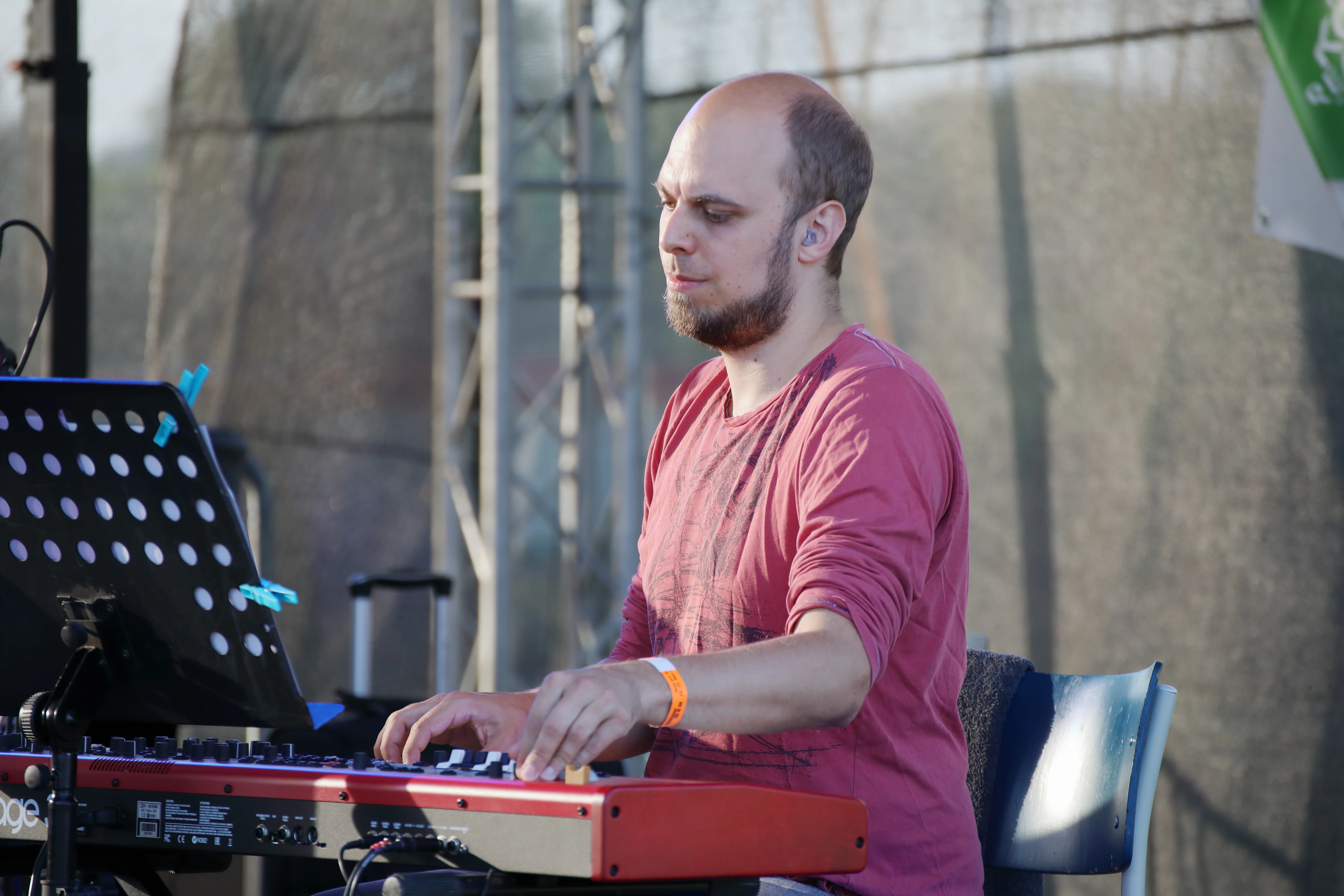
Image from Wikipedia
Image from Wikipedia
Philipp Nykrin: The Austrian Jazz Pianist between Improvisation, Electronics, and Sonic Independence
An artist who understands jazz as an open sound laboratory
Philipp Nykrin, born in 1984 in Salzburg, is one of the most distinctive voices in contemporary Austrian jazz. As a pianist, synthesizer player, and composer, he has developed a music career that cannot be confined to a single genre. His artistic development consistently navigates between acoustic intimacy, electronic colorfulness, and improvisational freedom.
From an early age, he was shaped by an environment of musicians and music educators before he transitioned from classical training to jazz. This shift is not a break, but the core of his later aesthetic: the connection between structure and spontaneity, composition and moment. Nykrin embodies a sound that is intellectually precise yet emotionally open.
Biographical roots: Salzburg, family, and early education
Nykrin grew up in Salzburg and initially came to music through the violin before his attention increasingly turned to the piano. Coming from a musical family explains his early familiarity with sound, form, and discipline, yet his later career reveals primarily one thing: the urge to independently expand musical language. His classical background never remained a mere foundation but became a resonant space for his later jazz language.
After finishing high school, he began studying jazz piano at the Anton Bruckner Private University in Linz in 2003 with Martin Stepanik and Christoph Cech, complementing this with jazz violin under Andreas Schreiber. This dual perspective on harmony and melody continues to shape his understanding of arrangement and composition today. Even at this early stage, the versatility that would later become his hallmark emerged.
The ascent: Scholarships, New York, and artistic maturation
An early milestone in his career was receiving the annual scholarship for music from the state of Salzburg in 2006. In 2007, he received the New York scholarship from the Hans Koller Prize, which opened up not only international contacts but also direct impulses from one of the world's foremost jazz metropolises. During his time in New York, he received private lessons from Uri Caine, a pianist known for his stylistic openness and form-conscious experimentalism.
These stages are crucial for Nykrin's biography because they sharpened his musical stance: jazz as a mode of thought, not a rigid set of rules. Through encounters with diverse scenes, aesthetics, and improvisational cultures, he developed a language that naturally connects melody, groove, electronic textures, and free condensation. This is precisely where his unique authority within the Austrian scene lies.
Career highlights: Saalfelden, Concert Hall, and international stages
Highlights of his career include the composition commission at the International Jazzfestival Saalfelden in 2014. For this project, he deliberately presented a formation composed entirely of Austrian musicians, using the invitation to consolidate collaboration and sonic identity. Such moments showcase Nykrin as an artist who not only interprets but also shapes, curates, and designs aesthetic spaces.
In February 2017, he presented his album Songbook at the Wiener Konzerthaus, one of the leading venues for sophisticated music in the German-speaking world. His music career is also notable internationally: His concerts and tours have taken him through more than 20 countries on four continents. Nykrin belongs to those musicians whose artistic development simultaneously arises from local roots and global mobility.
Projects and collaborations: From trio to open scene
Nykrin works as a leader and co-leader in his own projects like Philipp Nykrin Trio, Namby Pamby Boy, Wire Resistance, and Common Sense. At the same time, he shapes numerous collaborations as a producer and co-producer, including with the rapper Nina Fiva Sonnenberg as well as with artists such as Julian Le Play, Conchita Wurst, Texta, Olympique, Yasmo, Lylit, Lorenz Raab, and Thomas Gansch. This diversity points to a profile that does not set jazz, pop, hip-hop, and improvisation against one another but rather interconnects them productively.
Particularly important for his discography and self-understanding is the close connection to Fabian Rucker. Several releases, including the albums Wire Resistance and Songbook, have emerged from this creative axis of saxophone, piano, production, and sonic dramaturgy. The projects show Nykrin as a musician who does not remain confined to the role of accompanist or soloist but thinks formatively within ensembles.
Discography: Between Songbook, Wire Resistance, and ensemble works
His most important releases include Open Ended with the Philipp Nykrin Trio from 2007, Common Sense from 2009, Wire Resistance from 2015, and Songbook from 2017. These works mark different phases of his artistic development: from the early trio format to more compositionally compact pieces and finally to very personal solo and duo works. Especially Songbook encapsulates many of his strengths in a compact, multilingual format.
On this album, released by Listen Closely, he blends solo pieces with duos and guests such as Martin Eberle, Fabian Rucker, and Fiva. The pieces have descriptive titles and navigate between improvisation, arrangement, and song-oriented composition. In Nykrin's discography, it becomes evident that he does not treat jazz as an abstract category but rather as a vibrant form of musical storytelling.
Style and sound language: Acoustic meets electronics, jazz meets hip-hop
Nykrin's style can best be described as an open, organically growing sound language. He works with recurring rhythmic elements, loops, electronic embellishments, and a clear preference for melodic core ideas that are developed and transformed throughout a piece. Here, the piano often serves not just as a solo instrument but as a central bearer of atmosphere, movement, and harmony.
His music resides at the intersections of acoustic and electronic, jazz and hip-hop, groove and free improvisation. This very hybridity makes his work exciting for music lovers: It neither comes across as academically detached nor overly pleasing, but is deliberately tense, controlled, and simultaneously open. Nykrin uses composition as a starting point for movement, friction, and sonic expansion.
Critical reception: A musician with a distinctive profile
The music press particularly highlights Philipp Nykrin's stylistic versatility and the organically emerging complexity of his playing. He is repeatedly described as one of the busiest musicians in Austria, navigating diverse musical contexts with various formations and projects. His works are seen as evidence that jazz in Austria is not just about preserving tradition but also about experimentation, openness, and present-day relevance.
For Songbook, it was noted that no piece is like the other and each tells its own story. Wire Resistance, on the other hand, has been understood as proof that Nykrin moves well beyond conventional jazz boundaries and has developed an unmistakable sound language. This critical reception supports his profile as the author of his own musical world.
Current perspectives: Teaching, stage, and new formats
Alongside his work as a freelance musician, Nykrin is also anchored in education today. He teaches as a senior lecturer and took on a professorship for keyboard instruments in popular music at the Institute for Popular Music at mdw in October. This academic role underscores his authority not only as an interpreter but also as a mediator of knowledge, aesthetics, and contemporary music culture.
Artistically, he remains present: Projects with Efrat Alony are documented for 2026, where the duo of voice and piano will be expanded through electronic sound components. Such formats demonstrate that Nykrin's music career is not stagnant in retrospect but continues to move towards open improvisation and conceptual sound work. His current work remains as relevant as his previous releases.
Conclusion: Why Philipp Nykrin remains exciting
Philipp Nykrin is exciting because he conceives jazz as a dynamic art form, constantly extracting new perspectives from it. His biography intertwines classical training, international experience, productive collaborations, and an unmistakable artistic signature. Anyone who listens to his music encounters not just a mere stylistic citation but an independent language bridging composition, improvisation, and sound exploration.
It is precisely this blend of precision, openness, and energy that makes him one of the defining Austrian jazz musicians of his generation. Nykrin's stage is the laboratory, his piano the narrative instrument, and his ensemble a space for surprises. Anyone wanting to experience contemporary jazz in its most vibrant form should listen to Philipp Nykrin live.
Official channels of Philipp Nykrin:
- Instagram: no official profile found
- Facebook: no official profile found
- YouTube: no official profile found
- Spotify: no official profile found
- TikTok: no official profile found
Sources:
- Philipp Nykrin – Artist Website
- Austrian Music Export – Philipp Nykrin
- mica – music austria Database – Philipp Nykrin
- mdw – University of Music and Performing Arts Vienna – Philipp Nykrin
- mica – music austria – PHILIPP NYKRIN “Songbook”
- NDR Culture – Handel Fast Forward – Efrat Alony & Philipp Nykrin
- Porgy & Bess – Fabian Rucker x Philipp Nykrin / Philipp Nykrin Quintet
- Wikipedia: Philipp Nykrin