
Tennessee Williams
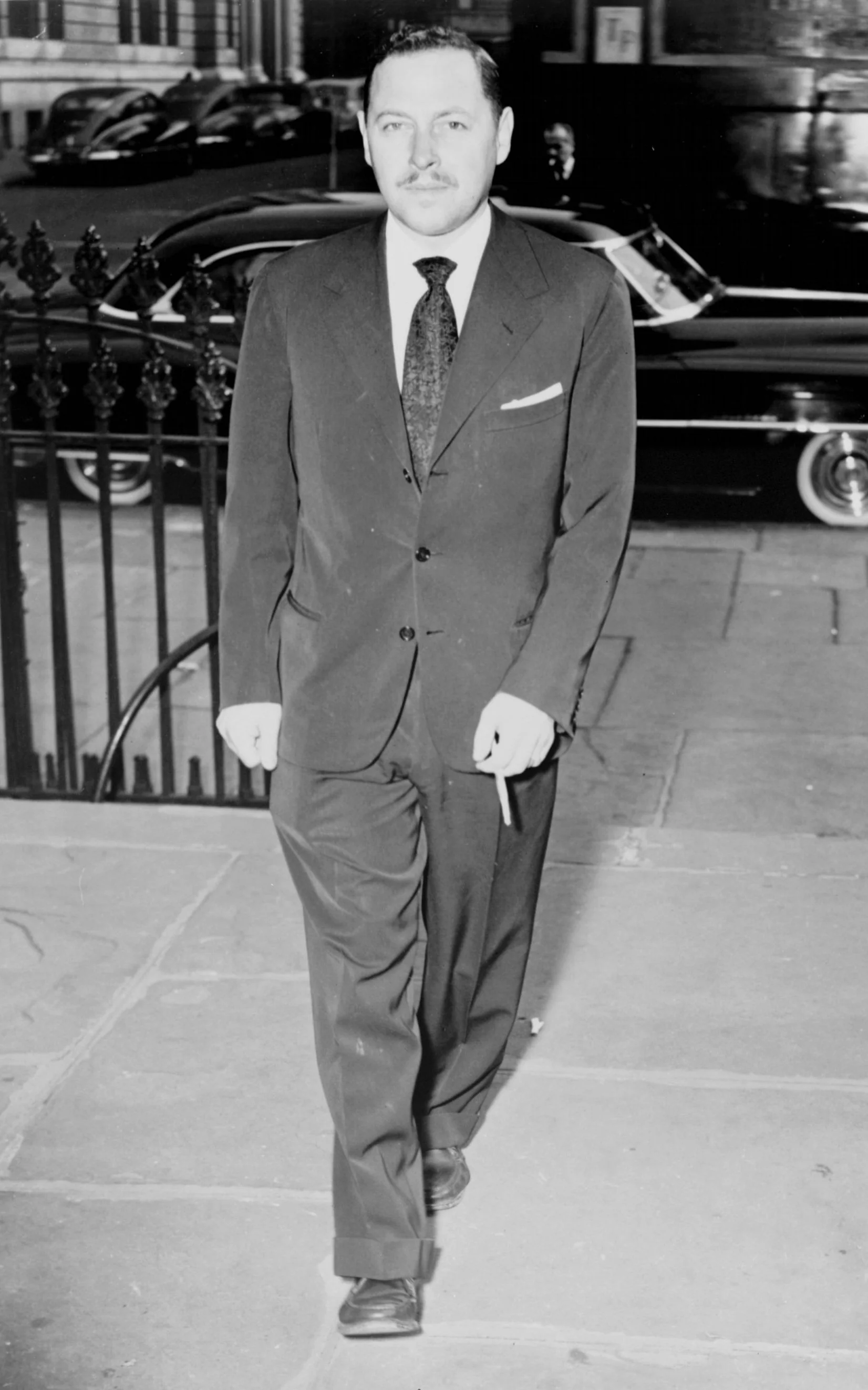
Image from Wikipedia
Image from Wikipedia
Tennessee Williams – The Playwright of the Fragile South
A great American storyteller of the stage, whose work continues to resonate today
Tennessee Williams, born Thomas Lanier Williams III on March 26, 1911, in Columbus, Mississippi, is one of the defining figures of 20th-century American theater. His plays create a space where desire, decline, loneliness, and societal masks collide, generating a distinctive dramatic tension. As one of the most influential playwrights of his time, he won the Pulitzer Prize and his works have been performed on major stages worldwide. ([britannica.com](https://www.britannica.com/biography/Tennessee-Williams?utm_source=openai))
Early Years: Mississippi, St. Louis, and the Perspective on Vulnerable Existences
Williams grew up in an environment marked by family tensions and lived in St. Louis from the age of twelve. This biographical shift between the American South and the industrial metropolis sharpened his perception of uprootedness, social insecurity, and the fragile inner lives of his characters. At the University of Missouri and later at the University of Iowa, he began to seriously dedicate himself to writing. The early experiences of provincial narrowness and familial pressure became emotional raw material for his later work. ([britannica.com](https://www.britannica.com/biography/Tennessee-Williams?utm_source=openai))
Even at this stage, what defines Williams' dramaturgy is evident: he does not observe from the outside but shapes conflicts from within. His characters rarely appear stable or clear-cut; they are intertwined with memories, shame, desire, and fear. It is from this interplay that his theater gains the psychological depth that later brought him international recognition. Therefore, the work of Tennessee Williams is not only a part of literary history but also a precise character study. ([britannica.com](https://www.britannica.com/biography/Tennessee-Williams?utm_source=openai))
The Breakthrough: From One-Act Plays to "The Glass Menagerie"
Williams first garnered significant attention with his collection of one-act plays, but the decisive breakthrough came in 1944 with The Glass Menagerie. The play, which had initially been rejected in Hollywood, brought him his first major stage success in Chicago and established him as an independent voice in modern drama. With this work, he found a form where memory, family tragedy, and poetic condensation merged into a new stage poetics. ([britannica.com](https://www.britannica.com/summary/Tennessee-Williams?utm_source=openai))
The Glass Menagerie is still considered a key work because it does not simply depict reality but organizes it as a space of memory. The characters exist in a tension between hope and failure, while the language remains simultaneously lyrical and sharply observant. In doing so, Williams combined intimacy and formal rigor in a way that profoundly influenced Broadway. His success was not a coincidence but the result of a consistently developed artistic signature. ([britannica.com](https://www.britannica.com/summary/Tennessee-Williams?utm_source=openai))
The Major Successes: Pulitzer Prizes, Broadway, and Cultural Dominance
With A Streetcar Named Desire, Williams set an even higher standard in 1947, winning the Pulitzer Prize for Drama. The play solidified his reputation as a playwright who depicts the psychological and social fragility of his characters with unprecedented intensity. Cat on a Hot Tin Roof also won the Pulitzer Prize in 1955 and remains one of the most performed works in American theater. These two awards mark not only personal triumphs but a phase of cultural dominance. ([wwwdev9.pulitzer.org](https://wwwdev9.pulitzer.org/winners/tennessee-williams?utm_source=openai))
In reception, Williams is often described as a chronicler of a North American South, where violence, suppressed sexuality, and societal pressure lurk beneath a genteel surface. Britannica aptly summarizes this core as a world of "human frustration" and an atmosphere where sex and violence are hidden under romantic politeness. This very tension between tenderness and escalation makes his plays timeless and highly adaptable for stage and film. ([britannica.com](https://www.britannica.com/biography/Tennessee-Williams?utm_source=openai))
Style and Themes: Southern Gothic as a Distinctive Signature
Critics classify Tennessee Williams under Southern Gothic, a Southern American aesthetic that intertwines beauty, decay, and moral unrest. His characters often inhabit the edges of social norms, where desire, loneliness, and self-deception become inseparable. Williams employed a language that is musical in rhythm but stark in diagnosis. This mix creates a theatrical effect that remains both poetic and unflinching. ([britannica.com](https://www.britannica.com/biography/Tennessee-Williams?utm_source=openai))
His dramatic approach is characterized by psychological precision and atmospheric density. The spaces in his plays are never mere backdrops; they reflect emotional states, social cages, and crumbling family structures. For this reason, his works are continually re-staged: they do not provide museum-like nostalgia but rather open conflicts that remain relevant. Williams wrote not only about the South but about the universal experience of being exposed. ([britannica.com](https://www.britannica.com/biography/Tennessee-Williams?utm_source=openai))
Important Works and Canon: More than Just Two Classics
The canon includes The Glass Menagerie, A Streetcar Named Desire, and Cat on a Hot Tin Roof, as well as Camino Real, Suddenly Last Summer, The Night of the Iguana, The Rose Tattoo, and The Roman Spring of Mrs. Stone. These works showcase the range of his oeuvre, from expressionistically colored stage pictures to psychological chamber plays with significant emotional depth. Williams never settled on a single tone but continuously expanded his style with new forms and registers. ([britannica.com](https://www.britannica.com/summary/Tennessee-Williams?utm_source=openai))
Notably, his plays have frequently been adapted into other media. Films based on or inspired by his works introduced his themes to an even broader audience and amplified his cultural influence. At the same time, theater preserved the actual strength of his language, which unfolds its full effect on stage. Therefore, Williams is both an author of text-based drama and a central figure in American popular culture. ([britannica.com](https://www.britannica.com/summary/Tennessee-Williams?utm_source=openai))
Later Works and Legacy: The Author Who Re-negotiated Himself
Even in later years, Williams remained productive and sought new dramatic forms. Britannica lists works such as The Night of the Iguana and later pieces to show that he cannot be read merely as an author of a short golden moment, but as a long-term working artist with a complex late oeuvre. His career encompasses not only the famous hits but also a persistent struggle for expression, form, and recognition. A significant part of his authenticity lies precisely in this. ([britannica.com](https://www.britannica.com/biography/Tennessee-Williams?utm_source=openai))
The fact that his work remains present today at festivals, in theaters, and literary programs confirms this sustainability. The Tennessee Williams & New Orleans Literary Festival explicitly sees itself as a celebration of literature, theater, cuisine, and music, naming Tennessee Williams as the intellectual center of its work. This institution shows how deeply Williams is embedded in the cultural memory. His plays are not merely classics but living areas of friction for new generations of theater makers. ([tennesseewilliams.net](https://tennesseewilliams.net/about/?utm_source=openai))
Cultural Influence: An American Classic with Global Reach
Williams' influence extends far beyond the American stage landscape. His themes—desire, failure, familial pressure, social masking—are universally relatable, making him an author who is read, performed, and reinterpreted worldwide. Britannica describes his work as widely translated and performed globally, underscoring the global reach of this theatrical aesthetic. His dramas have shaped generations of actors and permanently altered modern psychological theater. ([britannica.com](https://www.britannica.com/biography/Tennessee-Williams?utm_source=openai))
In cultural discourse, Williams remains a reference point regarding portrayals of the South, queer readings, societal limitations, and the depiction of damaged intimacy. His characters still resonate today because they do not embody ideals but contradictions. This lends his work an emotional truth that transcends any trend. Tennessee Williams represents a theater that hurts, seduces, and lingers long after. ([britannica.com](https://www.britannica.com/biography/Tennessee-Williams?utm_source=openai))
Conclusion: Why Tennessee Williams Continues to Fascinate
Tennessee Williams remains compelling because he brought human fragility to the stage with rare accuracy. His plays combine poetic language, psychological depth, and societal tension into a distinctive canon. Anyone wanting to understand American theater cannot overlook him. Those wishing to experience great stage art should not only read his works but also see them live. ([britannica.com](https://www.britannica.com/biography/Tennessee-Williams?utm_source=openai))
Official Channels of Tennessee Williams:
- Instagram: No official profile found
- Facebook: No official profile found
- YouTube: No official profile found
- Spotify: No official profile found
- TikTok: No official profile found
Sources:
- Britannica – Tennessee Williams
- Britannica – Tennessee Williams summary
- The Pulitzer Prizes – Tennessee Williams
- The Pulitzer Prizes – Drama prize winners
- Tony Awards – Official Website
- Tennessee Williams & New Orleans Literary Festival – Official Website
- Tennessee Williams & New Orleans Literary Festival – About
- Wikipedia: Image and text source
Upcoming Events
The Glass Menagerie at Bürgerhaus Pullach
An evening full of memory and quiet power at Bürgerhaus Pullach: The Glass Menagerie touches with fine acting and quiet tension. 08.07.2026, 8 PM, tickets from €26.40. #Theater
A STREETCAR NAMED DESIRE
An evening between desire, fracture, and great acting: A Streetcar Named Desire at Theater Hof on July 11, 2026. Intense, intelligent, moving. #Theater