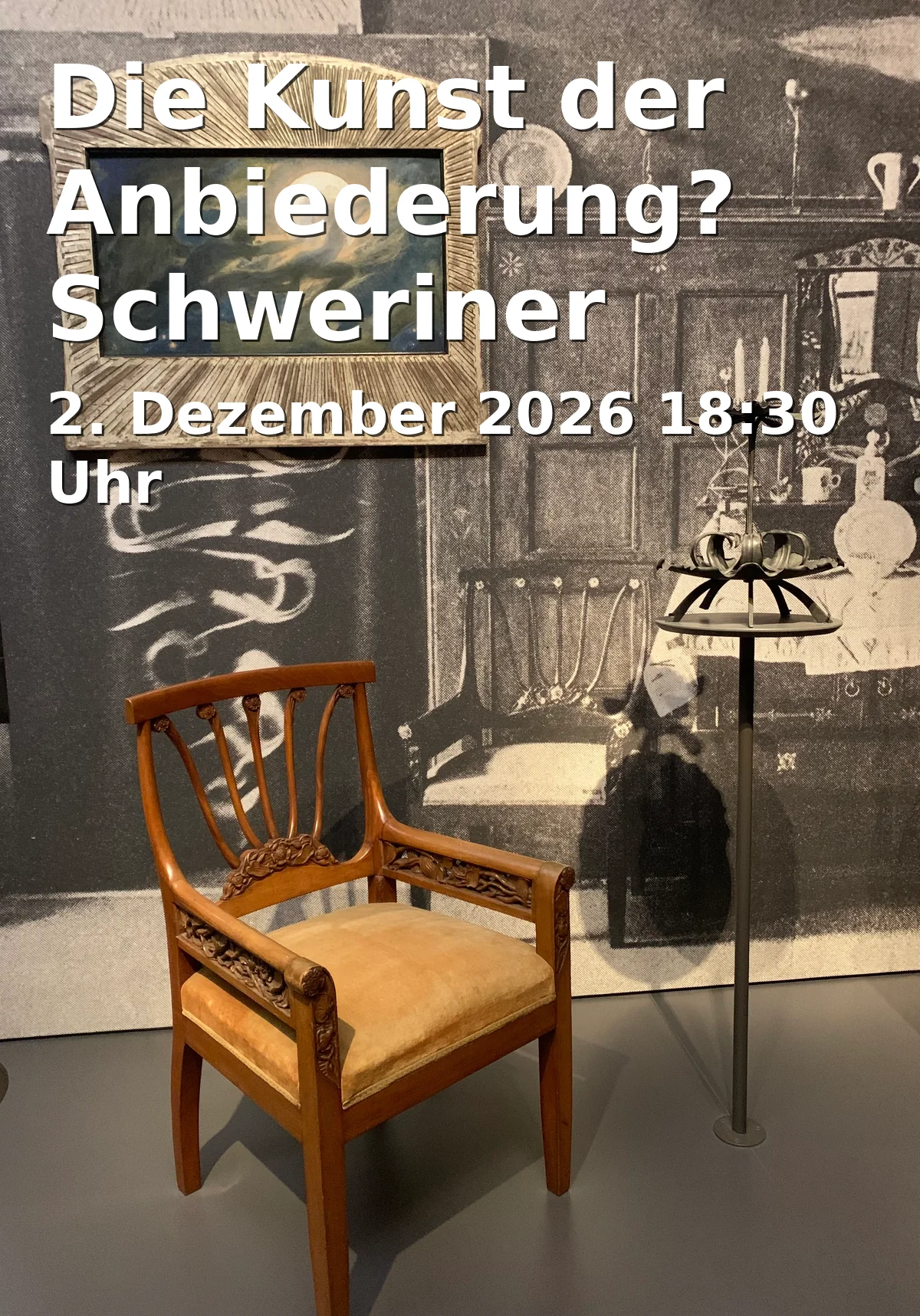
The Art of Conformity? Schwerin Museums Between Republic and Dictatorship
Date and Time
Location
Price
About this Event
Mood
Venue Type
When Museums Come Under Political Pressure
How do museums change when a democracy collapses and a dictatorship claims its cultural role? The lecture and dialogue The Art of Conformity? examines the political upheavals between monarchy, republic, and National Socialist dictatorship through the example of Schwerin museums.
Museum History in the Tension of Power
At the center is the question of how the tasks, self-understanding, and scope of action of museum institutions changed after the National Socialist seizure of power in 1933. It highlights forms of adaptation, approval, and active participation in the dictatorship's cultural policy. The event thus opens a differentiated view of museum history, institutional responsibility, and the political function of art collections.
Three Eras, Recurring Questions
The historical classification connects three political turning points of the first half of the 20th century: the end of the monarchy and the transition to the republic in 1918, the National Socialist seizure of power in 1933, and the collapse of the dictatorship in 1945. In comparison, personnel and institutional continuities become visible. The examination of works enters into a dialogue with cultural political analysis and provenance awareness.
A Lecture with Room for Dialogue
The art historian Yannick Philipp Schwarz will lead the event. He studied art history, modern history, and political science at the University of Kassel and researches the history of museum collections in the Weimar Republic. Since 2023, he has worked as a curator at the State Palaces, Gardens, and Art Collections of Mecklenburg-Vorpommern and is involved in the redesign of the Schwerin Castle Museum.
Aesthetic Experience and Cultural Responsibility
The event combines art historical expertise with cultural education. It questions what responsibility museums have towards political powers and how exhibitions, collections, and curatorial decisions shape social reality. The experience of art arises not only from observing painting, sculpture, or installations but also from critically engaging with the conditions of their presentation.
Conclusion: The lecture promises an insightful art experience at the intersection of museum history, dictatorship research, and curation. Those who want to understand how cultural institutions respond to political upheavals and what responsibilities museums have today will find an inspiring space for aesthetic experience, historical reflection, and open dialogue in the Kompass Gallery.
Official Channels of Yannick Philipp Schwarz:
- Instagram: no official profile found
- Facebook: no official profile found
- YouTube: no official profile found
- Website: no official profile found