
Alte Crivitzer Landstraße 13, Schwerin
Alte Crivitzer Landstraße 13, 19063 Schwerin, Germany
Open Air Museum of Ethnography Schwerin Mueß | Tickets & Parking
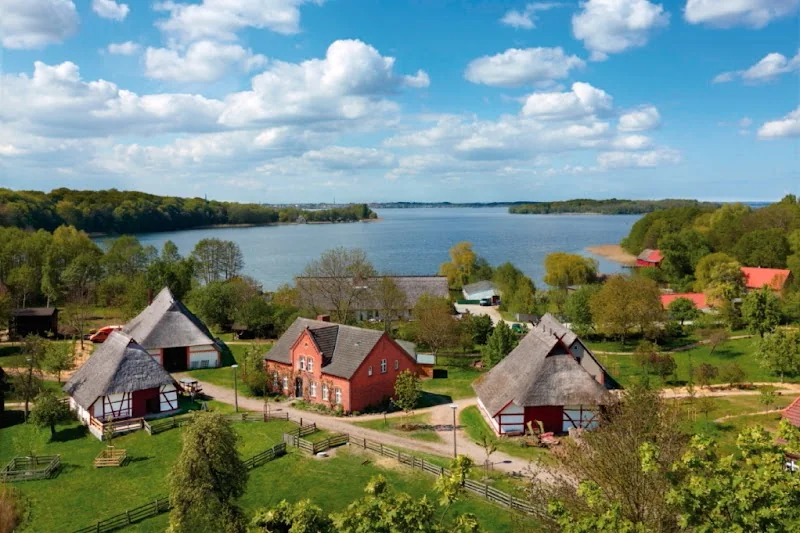
The Open Air Museum Schwerin-Mueß is not a place for a quick obligatory visit, but a vibrant village ensemble where history, landscape, and everyday culture meet directly. Those looking for Open Air Schwerin today, the Open Air Museum Schwerin Mueß, or a family-friendly break by Lake Schwerin will find a spacious area with historical farmhouses, smallholder and cottage structures, a village school, a school barn, and plenty of nature. The official city website describes the museum as a window into the past and emphasizes that on the extensive grounds, not only buildings but also seasonal animal husbandry, guided tours, and hands-on activities can be experienced. This mix is what makes the place so strong: it is a cultural destination, a learning place for children, a local recreation area, and one of the most interesting sights in Schwerin at the same time. The location on the southern shore of Lake Schwerin enhances the impression that here culture and landscape form a common narrative. ([schwerin.de](https://www.schwerin.de/kultur-tourismus/kunst-kultur/bildende-kunst-museen/freilichtmuseum-schwerin-muess/mitmachen/))
Opening Hours, Tickets, and Directions to the Open Air Museum
For visitors specifically looking for Open Air Museum Schwerin opening hours, tickets, or directions, the official city website is the most important guide. The 2026 season begins on March 17, 2026, and runs until October 31, 2026. From March 17 to September 30, the museum is open from Tuesday to Sunday from 10:00 AM to 6:00 PM, and the café from 11:00 AM to 5:00 PM. In October, the hours are 10:00 AM to 5:00 PM for the museum and 11:00 AM to 4:30 PM for the café, Tuesday to Sunday. The museum is open on holidays throughout the season, but special events may have different times. The admission is deliberately family-friendly: adults pay 5 euros, reduced tickets are 3.50 euros, children up to 6 years are free, children from 7 to 17 years pay 2 euros, and the family ticket costs 10 euros. ([schwerin.de](https://www.schwerin.de/kultur-tourismus/kunst-kultur/bildende-kunst-museen/freilichtmuseum-schwerin-muess/oeffnungszeiten-preise-anfahrt/index.html))
The city also provides reliable facts for arrival. By car, the route leads from the center of Schwerin towards A14 or B321 towards Crivitz/Parchim. Just before leaving the town, turn towards Schwerin-Mueß onto Alte Crivitzer Landstraße; the museum entrance is located on the street Zum Alten Bauernhof. Coming from Crivitz, you can go through Raben-Steinfeld and then also head towards Zum Alten Bauernhof. Those using public transport can take tram lines 1 or 2 to Stauffenbergstraße and then transfer to bus line 6 towards Mueß Ausbau; the destination stop is called Freilichtmuseum. For cyclists, it is important that bikes are not allowed on the premises and should be locked up in front of the museum. Additionally, there is a practical service note: dogs are allowed on the premises on a leash, which makes the visit more relaxed for many day guests. ([schwerin.de](https://www.schwerin.de/kultur-tourismus/kunst-kultur/bildende-kunst-museen/freilichtmuseum-schwerin-muess/oeffnungszeiten-preise-anfahrt/index.html))
History of the Village of Mueß and Its Historical Buildings
The special significance of the Open Air Museum lies in its evolved historical structure. The city of Schwerin describes Mueß as a former domain village, whose settlement core has remarkably been preserved. Besides the old farmhouses, the later-established smallholder settlements along the main roads are still easily recognizable. This development is not only important for Mueß itself but is exemplary for many Mecklenburg villages, where social stratification, craftsmanship, and agriculture were spatially manifested. In the museum, this village history can today be read from concrete buildings and exhibitions, rather than just learned abstractly. Particularly impressive is the farmhouse of Hufe I, which was built in the second half of the 17th century after the Thirty Years' War. It has been modified and rebuilt several times, allowing one to trace the gradual change in rural lifestyles. ([cms.schwerin.de](https://cms.schwerin.de/kultur-tourismus/kunst-kultur/bildende-kunst-museen/freilichtmuseum-schwerin-muess/unsere-ausstellungen/index.html))
Other buildings also tell of societal changes. The city documents that starting in 1753, new smallholder farms were established through a settlement edict by Duke Christian Ludwig to create economic opportunities in the land. Smallholders had little economic space but often lived as craftsmen, wage workers, or traders, thus shaping the village culture of the region. This includes the old Mueß village school, which was used until the 1975/76 school year and later set up as a museum, as well as other historical utility buildings that densify the village ensemble. The charm of the place lies in the fact that one does not only see individual objects but experiences a coherent landscape of courtyard, garden, school, barn, and pathways. This is precisely why the Open Air Museum does not feel like a collection of facades but like a real village with a structure that has grown over centuries. ([cms.schwerin.de](https://cms.schwerin.de/kultur-tourismus/kunst-kultur/bildende-kunst-museen/freilichtmuseum-schwerin-muess/unsere-ausstellungen/index.html))
Children's Museum, Guided Tours, and Family Offers
For those traveling with children or looking for a family outing with substance, the Open Air Museum Schwerin-Mueß offers a clear added value. The official site highlights that the children's museum is located in the school barn and is designed as a hands-on exhibition for younger visitors. Two exhibitions are the focus there: From Riffelkamm to Knarrbücks and Between Duty and Fantasy. The content revolves around agricultural textile production, clothing, laundry, everyday work, and childhood in the village. Especially because the presentation invites touching and trying out, it functions not only as knowledge transfer but also as an experiential space. The city describes that children can perceive various fabrics, laundry, and clothing with all their senses and can be creative in a workshop room. This combination of information, action, and imagination makes the place a true learning and experience space. ([cms.schwerin.de](https://cms.schwerin.de/kultur-tourismus/kunst-kultur/bildende-kunst-museen/freilichtmuseum-schwerin-muess/unsere-ausstellungen/index.html))
Even outside the children's museum, the family character is evident. In summer, the museum offers public guided tours, demonstration performances, and historical programs that bring the living environment around 1900 to life. The city reports on morning tours through historical buildings, demonstrations of laundry, sewing, embroidery, butter making, and bread dough, as well as history weekends with around 50 performers. For children's groups and families, the school yard with village school, hands-on exhibitions, and additional creative space is also worthwhile. Many of the additional offers are free; only the regular museum admission applies. This creates a visit that not only provides educational content but also allows children real movement, curiosity, and moments of discovery. Those looking for family outings in Schwerin, children's museum Schwerin Mueß, or guided tours at the Open Air Museum Mueß will find a very broad offer with a clear structure here. ([schwerin.de](https://www.schwerin.de/news/geschichte-erleben-im-freilichtmuseum/))
Exhibitions, Music, and Seasonal Events
The Open Air Museum is not a static place but works with changing focuses and permanent exhibitions. In the official archives of the city, themes such as inland fishing, city history, traditional music, smallholder culture, and regional lifestyles can be found. Particularly interesting is that the institution not only exhibits museum-like but also connects research, mediation, and cultural practice. The Center for Traditional Music at the museum hosts concerts, dance evenings, music workshops, and educational offerings for children. Furthermore, the city refers to the Windros Festival context, showing that the museum is also perceived as a cultural place with musical outreach. For visitors who think of vibrant summer offers at Open Air Schwerin 2025 or Open Air Schwerin today, this aspect is crucial: it is not about a classic showcase, but about changing events, music, and historical experiences in the open air. ([cms.schwerin.de](https://cms.schwerin.de/kultur-tourismus/kunst-kultur/bildende-kunst-museen/freilichtmuseum-schwerin-muess/unsere-ausstellungen/sonderausstellungen-ausstellungen-archiv/index.html))
The currently visible special programs also underline this versatility. The city of Schwerin reports on public guided tours, demonstration performances, and historical representation days, where museum staff take care of tasks from village life in historical clothing. Additionally, there are always special exhibitions in the art gallery and seasonal projects that expand the museum's archive. The exhibition history thus shows not only a collection of historical objects but also a place where interpretations, research, and mediation continue to evolve. Especially for SEO search queries like Open Air Museum Schwerin program, events Schwerin Mueß, or exhibition Schwerin Mueß, it is important: the offerings change throughout the year, and the official city pages are the best source for current dates. Therefore, those planning a visit should pay attention not only to the permanent exhibitions but also to time-limited offerings, as this is often where the strongest experiences take place. ([schwerin.de](https://www.schwerin.de/news/geschichte-erleben-im-freilichtmuseum/))
Nature, Garden Worlds, and the Museum Grounds by Lake Schwerin
A significant part of the experience lies outdoors. The city describes the Open Air Museum as an extensive area where one can enjoy nature and experience seasonal animals like sheep, bees, and chickens. The area of the Mueßer Garden Worlds is particularly strong, focusing on the historical use of garden areas, orchards, and teaching gardens. There, the museum gardener takes care of old fruit varieties, shrubs, and the front gardens of smallholdings and cottages. According to the official site, around 240 fruit trees are currently growing in the orchards, exclusively varieties that were known in Mecklenburg in the 19th century. The museum thus connects cultural history and nature conservation in a very vivid way. So, for those looking for a trip to Lake Schwerin, nature experiences, or a quiet day destination, here you get not only historical buildings but also flowers, meadows, fruit trees, and a consciously maintained landscape. ([schwerin.de](https://www.schwerin.de/kultur-tourismus/kunst-kultur/bildende-kunst-museen/freilichtmuseum-schwerin-muess/mitmachen/))
Particularly attractive for families and nature-interested visitors is the bee learning path. At five stations, the development of beekeeping in Mecklenburg is explained, from hollow tree trunks to basket beekeeping to modern hive types made of wood or plastic. The city offers guided tours for adults and children. Additionally, there is a historically inspired garden facility with vegetables, perennial plants, a tree nursery, a bee viewing area, and a mulberry hedge in the village school garden. This facility shows how closely education, agriculture, and garden culture were connected in the 19th century. The museum develops a place where visitors can not only look but also understand how nutrition, plant diversity, and care worked in the past and why this knowledge is relevant today. The combination of open air, nature, and authentic rural culture makes the place in Schwerin so unique. ([neu.schwerin.de](https://neu.schwerin.de/kultur-tourismus/kunst-kultur/bildende-kunst-museen/freilichtmuseum-schwerin-muess/muesser-gruen/index.html))
Café, Services, and Practical Visitor Tips
Practical information is crucial for many search queries, and here too, the location of the museum is well described. The museum café is open during the season and has its own opening hours, so a visit can be well combined with a break in the green. For orientation on site, it is advisable to take a close look at the official directions, as the entrance is not directly on a major main road but on the street Zum Alten Bauernhof. Those arriving by bicycle should note that bikes must be locked up before the premises. Those traveling with a dog can bring their four-legged friend on a leash. These rules are simple but important, as they make the stay pleasant and orderly. Visitors looking for parking, tickets, or directions to the Open Air Museum Schwerin will benefit from checking the route in advance and comparing the opening hours with the seasonal calendar. Especially in the summer months and during special events, it may be advisable to arrive early. ([schwerin.de](https://www.schwerin.de/kultur-tourismus/kunst-kultur/bildende-kunst-museen/freilichtmuseum-schwerin-muess/oeffnungszeiten-preise-anfahrt/index.html))
The service offerings for groups are also remarkable. The museum offers thematic programs for school classes, children's groups, adults, and mixed groups, such as history in stories, textiles in the farmhouse, childhood between duties and fantasy, tours along the bee learning path, farm animal tours, garden tours, herb walks, and offerings on traditional music. For children and teenagers, there are formatted guided tours and project offerings suitable for 2- to 3-hour visits. So, for those planning not just a walk but a content-rich outing, there are good conditions for school trips, birthdays, clubs, or multigenerational visits. Together with the café, the historical buildings, the gardening areas, and the seasonal programs, a place is created that not only looks beautiful but is also well-organized and pedagogically sound. This is exactly what makes the Open Air Museum Schwerin-Mueß a location that impresses in search queries about tickets, opening hours, directions, and family programs alike. ([schwerin.de](https://www.schwerin.de/kultur-tourismus/kunst-kultur/bildende-kunst-museen/freilichtmuseum-schwerin-muess/mitmachen/))
Sources:
- State Capital Schwerin - Opening Hours, Prices, Directions
- State Capital Schwerin - Open Air Museum Schwerin-Mueß
- State Capital Schwerin - Exhibitions
- State Capital Schwerin - Group Offers
- Experience History at the Open Air Museum Mueß - State Capital Schwerin
- Mueßer Garden Worlds - State Capital Schwerin
Show moreShow less
Open Air Museum of Ethnography Schwerin Mueß | Tickets & Parking
The Open Air Museum Schwerin-Mueß is not a place for a quick obligatory visit, but a vibrant village ensemble where history, landscape, and everyday culture meet directly. Those looking for Open Air Schwerin today, the Open Air Museum Schwerin Mueß, or a family-friendly break by Lake Schwerin will find a spacious area with historical farmhouses, smallholder and cottage structures, a village school, a school barn, and plenty of nature. The official city website describes the museum as a window into the past and emphasizes that on the extensive grounds, not only buildings but also seasonal animal husbandry, guided tours, and hands-on activities can be experienced. This mix is what makes the place so strong: it is a cultural destination, a learning place for children, a local recreation area, and one of the most interesting sights in Schwerin at the same time. The location on the southern shore of Lake Schwerin enhances the impression that here culture and landscape form a common narrative. ([schwerin.de](https://www.schwerin.de/kultur-tourismus/kunst-kultur/bildende-kunst-museen/freilichtmuseum-schwerin-muess/mitmachen/))
Opening Hours, Tickets, and Directions to the Open Air Museum
For visitors specifically looking for Open Air Museum Schwerin opening hours, tickets, or directions, the official city website is the most important guide. The 2026 season begins on March 17, 2026, and runs until October 31, 2026. From March 17 to September 30, the museum is open from Tuesday to Sunday from 10:00 AM to 6:00 PM, and the café from 11:00 AM to 5:00 PM. In October, the hours are 10:00 AM to 5:00 PM for the museum and 11:00 AM to 4:30 PM for the café, Tuesday to Sunday. The museum is open on holidays throughout the season, but special events may have different times. The admission is deliberately family-friendly: adults pay 5 euros, reduced tickets are 3.50 euros, children up to 6 years are free, children from 7 to 17 years pay 2 euros, and the family ticket costs 10 euros. ([schwerin.de](https://www.schwerin.de/kultur-tourismus/kunst-kultur/bildende-kunst-museen/freilichtmuseum-schwerin-muess/oeffnungszeiten-preise-anfahrt/index.html))
The city also provides reliable facts for arrival. By car, the route leads from the center of Schwerin towards A14 or B321 towards Crivitz/Parchim. Just before leaving the town, turn towards Schwerin-Mueß onto Alte Crivitzer Landstraße; the museum entrance is located on the street Zum Alten Bauernhof. Coming from Crivitz, you can go through Raben-Steinfeld and then also head towards Zum Alten Bauernhof. Those using public transport can take tram lines 1 or 2 to Stauffenbergstraße and then transfer to bus line 6 towards Mueß Ausbau; the destination stop is called Freilichtmuseum. For cyclists, it is important that bikes are not allowed on the premises and should be locked up in front of the museum. Additionally, there is a practical service note: dogs are allowed on the premises on a leash, which makes the visit more relaxed for many day guests. ([schwerin.de](https://www.schwerin.de/kultur-tourismus/kunst-kultur/bildende-kunst-museen/freilichtmuseum-schwerin-muess/oeffnungszeiten-preise-anfahrt/index.html))
History of the Village of Mueß and Its Historical Buildings
The special significance of the Open Air Museum lies in its evolved historical structure. The city of Schwerin describes Mueß as a former domain village, whose settlement core has remarkably been preserved. Besides the old farmhouses, the later-established smallholder settlements along the main roads are still easily recognizable. This development is not only important for Mueß itself but is exemplary for many Mecklenburg villages, where social stratification, craftsmanship, and agriculture were spatially manifested. In the museum, this village history can today be read from concrete buildings and exhibitions, rather than just learned abstractly. Particularly impressive is the farmhouse of Hufe I, which was built in the second half of the 17th century after the Thirty Years' War. It has been modified and rebuilt several times, allowing one to trace the gradual change in rural lifestyles. ([cms.schwerin.de](https://cms.schwerin.de/kultur-tourismus/kunst-kultur/bildende-kunst-museen/freilichtmuseum-schwerin-muess/unsere-ausstellungen/index.html))
Other buildings also tell of societal changes. The city documents that starting in 1753, new smallholder farms were established through a settlement edict by Duke Christian Ludwig to create economic opportunities in the land. Smallholders had little economic space but often lived as craftsmen, wage workers, or traders, thus shaping the village culture of the region. This includes the old Mueß village school, which was used until the 1975/76 school year and later set up as a museum, as well as other historical utility buildings that densify the village ensemble. The charm of the place lies in the fact that one does not only see individual objects but experiences a coherent landscape of courtyard, garden, school, barn, and pathways. This is precisely why the Open Air Museum does not feel like a collection of facades but like a real village with a structure that has grown over centuries. ([cms.schwerin.de](https://cms.schwerin.de/kultur-tourismus/kunst-kultur/bildende-kunst-museen/freilichtmuseum-schwerin-muess/unsere-ausstellungen/index.html))
Children's Museum, Guided Tours, and Family Offers
For those traveling with children or looking for a family outing with substance, the Open Air Museum Schwerin-Mueß offers a clear added value. The official site highlights that the children's museum is located in the school barn and is designed as a hands-on exhibition for younger visitors. Two exhibitions are the focus there: From Riffelkamm to Knarrbücks and Between Duty and Fantasy. The content revolves around agricultural textile production, clothing, laundry, everyday work, and childhood in the village. Especially because the presentation invites touching and trying out, it functions not only as knowledge transfer but also as an experiential space. The city describes that children can perceive various fabrics, laundry, and clothing with all their senses and can be creative in a workshop room. This combination of information, action, and imagination makes the place a true learning and experience space. ([cms.schwerin.de](https://cms.schwerin.de/kultur-tourismus/kunst-kultur/bildende-kunst-museen/freilichtmuseum-schwerin-muess/unsere-ausstellungen/index.html))
Even outside the children's museum, the family character is evident. In summer, the museum offers public guided tours, demonstration performances, and historical programs that bring the living environment around 1900 to life. The city reports on morning tours through historical buildings, demonstrations of laundry, sewing, embroidery, butter making, and bread dough, as well as history weekends with around 50 performers. For children's groups and families, the school yard with village school, hands-on exhibitions, and additional creative space is also worthwhile. Many of the additional offers are free; only the regular museum admission applies. This creates a visit that not only provides educational content but also allows children real movement, curiosity, and moments of discovery. Those looking for family outings in Schwerin, children's museum Schwerin Mueß, or guided tours at the Open Air Museum Mueß will find a very broad offer with a clear structure here. ([schwerin.de](https://www.schwerin.de/news/geschichte-erleben-im-freilichtmuseum/))
Exhibitions, Music, and Seasonal Events
The Open Air Museum is not a static place but works with changing focuses and permanent exhibitions. In the official archives of the city, themes such as inland fishing, city history, traditional music, smallholder culture, and regional lifestyles can be found. Particularly interesting is that the institution not only exhibits museum-like but also connects research, mediation, and cultural practice. The Center for Traditional Music at the museum hosts concerts, dance evenings, music workshops, and educational offerings for children. Furthermore, the city refers to the Windros Festival context, showing that the museum is also perceived as a cultural place with musical outreach. For visitors who think of vibrant summer offers at Open Air Schwerin 2025 or Open Air Schwerin today, this aspect is crucial: it is not about a classic showcase, but about changing events, music, and historical experiences in the open air. ([cms.schwerin.de](https://cms.schwerin.de/kultur-tourismus/kunst-kultur/bildende-kunst-museen/freilichtmuseum-schwerin-muess/unsere-ausstellungen/sonderausstellungen-ausstellungen-archiv/index.html))
The currently visible special programs also underline this versatility. The city of Schwerin reports on public guided tours, demonstration performances, and historical representation days, where museum staff take care of tasks from village life in historical clothing. Additionally, there are always special exhibitions in the art gallery and seasonal projects that expand the museum's archive. The exhibition history thus shows not only a collection of historical objects but also a place where interpretations, research, and mediation continue to evolve. Especially for SEO search queries like Open Air Museum Schwerin program, events Schwerin Mueß, or exhibition Schwerin Mueß, it is important: the offerings change throughout the year, and the official city pages are the best source for current dates. Therefore, those planning a visit should pay attention not only to the permanent exhibitions but also to time-limited offerings, as this is often where the strongest experiences take place. ([schwerin.de](https://www.schwerin.de/news/geschichte-erleben-im-freilichtmuseum/))
Nature, Garden Worlds, and the Museum Grounds by Lake Schwerin
A significant part of the experience lies outdoors. The city describes the Open Air Museum as an extensive area where one can enjoy nature and experience seasonal animals like sheep, bees, and chickens. The area of the Mueßer Garden Worlds is particularly strong, focusing on the historical use of garden areas, orchards, and teaching gardens. There, the museum gardener takes care of old fruit varieties, shrubs, and the front gardens of smallholdings and cottages. According to the official site, around 240 fruit trees are currently growing in the orchards, exclusively varieties that were known in Mecklenburg in the 19th century. The museum thus connects cultural history and nature conservation in a very vivid way. So, for those looking for a trip to Lake Schwerin, nature experiences, or a quiet day destination, here you get not only historical buildings but also flowers, meadows, fruit trees, and a consciously maintained landscape. ([schwerin.de](https://www.schwerin.de/kultur-tourismus/kunst-kultur/bildende-kunst-museen/freilichtmuseum-schwerin-muess/mitmachen/))
Particularly attractive for families and nature-interested visitors is the bee learning path. At five stations, the development of beekeeping in Mecklenburg is explained, from hollow tree trunks to basket beekeeping to modern hive types made of wood or plastic. The city offers guided tours for adults and children. Additionally, there is a historically inspired garden facility with vegetables, perennial plants, a tree nursery, a bee viewing area, and a mulberry hedge in the village school garden. This facility shows how closely education, agriculture, and garden culture were connected in the 19th century. The museum develops a place where visitors can not only look but also understand how nutrition, plant diversity, and care worked in the past and why this knowledge is relevant today. The combination of open air, nature, and authentic rural culture makes the place in Schwerin so unique. ([neu.schwerin.de](https://neu.schwerin.de/kultur-tourismus/kunst-kultur/bildende-kunst-museen/freilichtmuseum-schwerin-muess/muesser-gruen/index.html))
Café, Services, and Practical Visitor Tips
Practical information is crucial for many search queries, and here too, the location of the museum is well described. The museum café is open during the season and has its own opening hours, so a visit can be well combined with a break in the green. For orientation on site, it is advisable to take a close look at the official directions, as the entrance is not directly on a major main road but on the street Zum Alten Bauernhof. Those arriving by bicycle should note that bikes must be locked up before the premises. Those traveling with a dog can bring their four-legged friend on a leash. These rules are simple but important, as they make the stay pleasant and orderly. Visitors looking for parking, tickets, or directions to the Open Air Museum Schwerin will benefit from checking the route in advance and comparing the opening hours with the seasonal calendar. Especially in the summer months and during special events, it may be advisable to arrive early. ([schwerin.de](https://www.schwerin.de/kultur-tourismus/kunst-kultur/bildende-kunst-museen/freilichtmuseum-schwerin-muess/oeffnungszeiten-preise-anfahrt/index.html))
The service offerings for groups are also remarkable. The museum offers thematic programs for school classes, children's groups, adults, and mixed groups, such as history in stories, textiles in the farmhouse, childhood between duties and fantasy, tours along the bee learning path, farm animal tours, garden tours, herb walks, and offerings on traditional music. For children and teenagers, there are formatted guided tours and project offerings suitable for 2- to 3-hour visits. So, for those planning not just a walk but a content-rich outing, there are good conditions for school trips, birthdays, clubs, or multigenerational visits. Together with the café, the historical buildings, the gardening areas, and the seasonal programs, a place is created that not only looks beautiful but is also well-organized and pedagogically sound. This is exactly what makes the Open Air Museum Schwerin-Mueß a location that impresses in search queries about tickets, opening hours, directions, and family programs alike. ([schwerin.de](https://www.schwerin.de/kultur-tourismus/kunst-kultur/bildende-kunst-museen/freilichtmuseum-schwerin-muess/mitmachen/))
Sources:
- State Capital Schwerin - Opening Hours, Prices, Directions
- State Capital Schwerin - Open Air Museum Schwerin-Mueß
- State Capital Schwerin - Exhibitions
- State Capital Schwerin - Group Offers
- Experience History at the Open Air Museum Mueß - State Capital Schwerin
- Mueßer Garden Worlds - State Capital Schwerin
Open Air Museum of Ethnography Schwerin Mueß | Tickets & Parking
The Open Air Museum Schwerin-Mueß is not a place for a quick obligatory visit, but a vibrant village ensemble where history, landscape, and everyday culture meet directly. Those looking for Open Air Schwerin today, the Open Air Museum Schwerin Mueß, or a family-friendly break by Lake Schwerin will find a spacious area with historical farmhouses, smallholder and cottage structures, a village school, a school barn, and plenty of nature. The official city website describes the museum as a window into the past and emphasizes that on the extensive grounds, not only buildings but also seasonal animal husbandry, guided tours, and hands-on activities can be experienced. This mix is what makes the place so strong: it is a cultural destination, a learning place for children, a local recreation area, and one of the most interesting sights in Schwerin at the same time. The location on the southern shore of Lake Schwerin enhances the impression that here culture and landscape form a common narrative. ([schwerin.de](https://www.schwerin.de/kultur-tourismus/kunst-kultur/bildende-kunst-museen/freilichtmuseum-schwerin-muess/mitmachen/))
Opening Hours, Tickets, and Directions to the Open Air Museum
For visitors specifically looking for Open Air Museum Schwerin opening hours, tickets, or directions, the official city website is the most important guide. The 2026 season begins on March 17, 2026, and runs until October 31, 2026. From March 17 to September 30, the museum is open from Tuesday to Sunday from 10:00 AM to 6:00 PM, and the café from 11:00 AM to 5:00 PM. In October, the hours are 10:00 AM to 5:00 PM for the museum and 11:00 AM to 4:30 PM for the café, Tuesday to Sunday. The museum is open on holidays throughout the season, but special events may have different times. The admission is deliberately family-friendly: adults pay 5 euros, reduced tickets are 3.50 euros, children up to 6 years are free, children from 7 to 17 years pay 2 euros, and the family ticket costs 10 euros. ([schwerin.de](https://www.schwerin.de/kultur-tourismus/kunst-kultur/bildende-kunst-museen/freilichtmuseum-schwerin-muess/oeffnungszeiten-preise-anfahrt/index.html))
The city also provides reliable facts for arrival. By car, the route leads from the center of Schwerin towards A14 or B321 towards Crivitz/Parchim. Just before leaving the town, turn towards Schwerin-Mueß onto Alte Crivitzer Landstraße; the museum entrance is located on the street Zum Alten Bauernhof. Coming from Crivitz, you can go through Raben-Steinfeld and then also head towards Zum Alten Bauernhof. Those using public transport can take tram lines 1 or 2 to Stauffenbergstraße and then transfer to bus line 6 towards Mueß Ausbau; the destination stop is called Freilichtmuseum. For cyclists, it is important that bikes are not allowed on the premises and should be locked up in front of the museum. Additionally, there is a practical service note: dogs are allowed on the premises on a leash, which makes the visit more relaxed for many day guests. ([schwerin.de](https://www.schwerin.de/kultur-tourismus/kunst-kultur/bildende-kunst-museen/freilichtmuseum-schwerin-muess/oeffnungszeiten-preise-anfahrt/index.html))
History of the Village of Mueß and Its Historical Buildings
The special significance of the Open Air Museum lies in its evolved historical structure. The city of Schwerin describes Mueß as a former domain village, whose settlement core has remarkably been preserved. Besides the old farmhouses, the later-established smallholder settlements along the main roads are still easily recognizable. This development is not only important for Mueß itself but is exemplary for many Mecklenburg villages, where social stratification, craftsmanship, and agriculture were spatially manifested. In the museum, this village history can today be read from concrete buildings and exhibitions, rather than just learned abstractly. Particularly impressive is the farmhouse of Hufe I, which was built in the second half of the 17th century after the Thirty Years' War. It has been modified and rebuilt several times, allowing one to trace the gradual change in rural lifestyles. ([cms.schwerin.de](https://cms.schwerin.de/kultur-tourismus/kunst-kultur/bildende-kunst-museen/freilichtmuseum-schwerin-muess/unsere-ausstellungen/index.html))
Other buildings also tell of societal changes. The city documents that starting in 1753, new smallholder farms were established through a settlement edict by Duke Christian Ludwig to create economic opportunities in the land. Smallholders had little economic space but often lived as craftsmen, wage workers, or traders, thus shaping the village culture of the region. This includes the old Mueß village school, which was used until the 1975/76 school year and later set up as a museum, as well as other historical utility buildings that densify the village ensemble. The charm of the place lies in the fact that one does not only see individual objects but experiences a coherent landscape of courtyard, garden, school, barn, and pathways. This is precisely why the Open Air Museum does not feel like a collection of facades but like a real village with a structure that has grown over centuries. ([cms.schwerin.de](https://cms.schwerin.de/kultur-tourismus/kunst-kultur/bildende-kunst-museen/freilichtmuseum-schwerin-muess/unsere-ausstellungen/index.html))
Children's Museum, Guided Tours, and Family Offers
For those traveling with children or looking for a family outing with substance, the Open Air Museum Schwerin-Mueß offers a clear added value. The official site highlights that the children's museum is located in the school barn and is designed as a hands-on exhibition for younger visitors. Two exhibitions are the focus there: From Riffelkamm to Knarrbücks and Between Duty and Fantasy. The content revolves around agricultural textile production, clothing, laundry, everyday work, and childhood in the village. Especially because the presentation invites touching and trying out, it functions not only as knowledge transfer but also as an experiential space. The city describes that children can perceive various fabrics, laundry, and clothing with all their senses and can be creative in a workshop room. This combination of information, action, and imagination makes the place a true learning and experience space. ([cms.schwerin.de](https://cms.schwerin.de/kultur-tourismus/kunst-kultur/bildende-kunst-museen/freilichtmuseum-schwerin-muess/unsere-ausstellungen/index.html))
Even outside the children's museum, the family character is evident. In summer, the museum offers public guided tours, demonstration performances, and historical programs that bring the living environment around 1900 to life. The city reports on morning tours through historical buildings, demonstrations of laundry, sewing, embroidery, butter making, and bread dough, as well as history weekends with around 50 performers. For children's groups and families, the school yard with village school, hands-on exhibitions, and additional creative space is also worthwhile. Many of the additional offers are free; only the regular museum admission applies. This creates a visit that not only provides educational content but also allows children real movement, curiosity, and moments of discovery. Those looking for family outings in Schwerin, children's museum Schwerin Mueß, or guided tours at the Open Air Museum Mueß will find a very broad offer with a clear structure here. ([schwerin.de](https://www.schwerin.de/news/geschichte-erleben-im-freilichtmuseum/))
Exhibitions, Music, and Seasonal Events
The Open Air Museum is not a static place but works with changing focuses and permanent exhibitions. In the official archives of the city, themes such as inland fishing, city history, traditional music, smallholder culture, and regional lifestyles can be found. Particularly interesting is that the institution not only exhibits museum-like but also connects research, mediation, and cultural practice. The Center for Traditional Music at the museum hosts concerts, dance evenings, music workshops, and educational offerings for children. Furthermore, the city refers to the Windros Festival context, showing that the museum is also perceived as a cultural place with musical outreach. For visitors who think of vibrant summer offers at Open Air Schwerin 2025 or Open Air Schwerin today, this aspect is crucial: it is not about a classic showcase, but about changing events, music, and historical experiences in the open air. ([cms.schwerin.de](https://cms.schwerin.de/kultur-tourismus/kunst-kultur/bildende-kunst-museen/freilichtmuseum-schwerin-muess/unsere-ausstellungen/sonderausstellungen-ausstellungen-archiv/index.html))
The currently visible special programs also underline this versatility. The city of Schwerin reports on public guided tours, demonstration performances, and historical representation days, where museum staff take care of tasks from village life in historical clothing. Additionally, there are always special exhibitions in the art gallery and seasonal projects that expand the museum's archive. The exhibition history thus shows not only a collection of historical objects but also a place where interpretations, research, and mediation continue to evolve. Especially for SEO search queries like Open Air Museum Schwerin program, events Schwerin Mueß, or exhibition Schwerin Mueß, it is important: the offerings change throughout the year, and the official city pages are the best source for current dates. Therefore, those planning a visit should pay attention not only to the permanent exhibitions but also to time-limited offerings, as this is often where the strongest experiences take place. ([schwerin.de](https://www.schwerin.de/news/geschichte-erleben-im-freilichtmuseum/))
Nature, Garden Worlds, and the Museum Grounds by Lake Schwerin
A significant part of the experience lies outdoors. The city describes the Open Air Museum as an extensive area where one can enjoy nature and experience seasonal animals like sheep, bees, and chickens. The area of the Mueßer Garden Worlds is particularly strong, focusing on the historical use of garden areas, orchards, and teaching gardens. There, the museum gardener takes care of old fruit varieties, shrubs, and the front gardens of smallholdings and cottages. According to the official site, around 240 fruit trees are currently growing in the orchards, exclusively varieties that were known in Mecklenburg in the 19th century. The museum thus connects cultural history and nature conservation in a very vivid way. So, for those looking for a trip to Lake Schwerin, nature experiences, or a quiet day destination, here you get not only historical buildings but also flowers, meadows, fruit trees, and a consciously maintained landscape. ([schwerin.de](https://www.schwerin.de/kultur-tourismus/kunst-kultur/bildende-kunst-museen/freilichtmuseum-schwerin-muess/mitmachen/))
Particularly attractive for families and nature-interested visitors is the bee learning path. At five stations, the development of beekeeping in Mecklenburg is explained, from hollow tree trunks to basket beekeeping to modern hive types made of wood or plastic. The city offers guided tours for adults and children. Additionally, there is a historically inspired garden facility with vegetables, perennial plants, a tree nursery, a bee viewing area, and a mulberry hedge in the village school garden. This facility shows how closely education, agriculture, and garden culture were connected in the 19th century. The museum develops a place where visitors can not only look but also understand how nutrition, plant diversity, and care worked in the past and why this knowledge is relevant today. The combination of open air, nature, and authentic rural culture makes the place in Schwerin so unique. ([neu.schwerin.de](https://neu.schwerin.de/kultur-tourismus/kunst-kultur/bildende-kunst-museen/freilichtmuseum-schwerin-muess/muesser-gruen/index.html))
Café, Services, and Practical Visitor Tips
Practical information is crucial for many search queries, and here too, the location of the museum is well described. The museum café is open during the season and has its own opening hours, so a visit can be well combined with a break in the green. For orientation on site, it is advisable to take a close look at the official directions, as the entrance is not directly on a major main road but on the street Zum Alten Bauernhof. Those arriving by bicycle should note that bikes must be locked up before the premises. Those traveling with a dog can bring their four-legged friend on a leash. These rules are simple but important, as they make the stay pleasant and orderly. Visitors looking for parking, tickets, or directions to the Open Air Museum Schwerin will benefit from checking the route in advance and comparing the opening hours with the seasonal calendar. Especially in the summer months and during special events, it may be advisable to arrive early. ([schwerin.de](https://www.schwerin.de/kultur-tourismus/kunst-kultur/bildende-kunst-museen/freilichtmuseum-schwerin-muess/oeffnungszeiten-preise-anfahrt/index.html))
The service offerings for groups are also remarkable. The museum offers thematic programs for school classes, children's groups, adults, and mixed groups, such as history in stories, textiles in the farmhouse, childhood between duties and fantasy, tours along the bee learning path, farm animal tours, garden tours, herb walks, and offerings on traditional music. For children and teenagers, there are formatted guided tours and project offerings suitable for 2- to 3-hour visits. So, for those planning not just a walk but a content-rich outing, there are good conditions for school trips, birthdays, clubs, or multigenerational visits. Together with the café, the historical buildings, the gardening areas, and the seasonal programs, a place is created that not only looks beautiful but is also well-organized and pedagogically sound. This is exactly what makes the Open Air Museum Schwerin-Mueß a location that impresses in search queries about tickets, opening hours, directions, and family programs alike. ([schwerin.de](https://www.schwerin.de/kultur-tourismus/kunst-kultur/bildende-kunst-museen/freilichtmuseum-schwerin-muess/mitmachen/))
Sources:
- State Capital Schwerin - Opening Hours, Prices, Directions
- State Capital Schwerin - Open Air Museum Schwerin-Mueß
- State Capital Schwerin - Exhibitions
- State Capital Schwerin - Group Offers
- Experience History at the Open Air Museum Mueß - State Capital Schwerin
- Mueßer Garden Worlds - State Capital Schwerin
Upcoming Events
No events found
Frequently Asked Questions
Reviews
Ann Cocopuff
8. June 2024
This outdoor museum does a great job of depicting the lifestyle of people who lived in the area years ago. I loved walking around in the garden and going inside various buildings. The cafe is also a pleasant place with lovely roses in front. I highly recommend this museum to everyone! It's a fun educational experience.
Katy H
5. November 2018
It is awesome place, I felt like time travelling. It is very good place to visit with your kids, family, friends, boyfriend, girlfriend, enemies (lol) with everyone. Oh ya, the staff are very friendly, the cafe inside this museum serves very good cappuccino and many other drinks and super delicious cakes. I will visit this place again when I am in Germany again.
Fraz Ahmad
30. August 2022
Really nice open air place with old German museum artifacts.
Dragomir Zaharia
16. November 2019
Well done, much to see, an acceptable cafeteria, lot of open space, the buildings are not crammed into each other - mostly because the place is as it was, and not like many other similar open air museums - buildings brought there and built next to others. Thus, it has a more natural atmosphere. It can be quiet (if there aren't many children about), and very relaxing. It did feel a bit like a time travel, which is, I believe, the main idea. Been there twice in a month, and we'll be there in spring for sure, at least once more.
Hannes
25. July 2020
It is a nice open air museum, ideal for hanging out with kids. Besides old farm houses, some century old machinery and centuries old tools, I liked the old Smith as well as the old school building. If you want to travel back in time for a bit, this would be a good place to begin with. I would love, if they would go the extra mile and engage in some actual story building for children. Maybe we could follow the footsteps of a (real or fictional) family for a day. The cafe serves some basics and offers decent snacks. If you are not there for cakes, do not expect anything special though.