
Daniel Chodowiecki
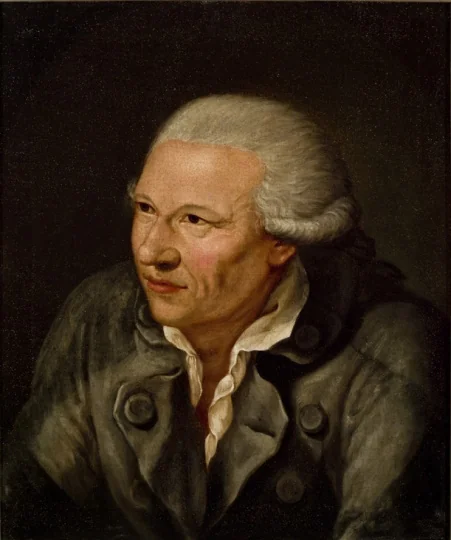
Image from Wikipedia
Image from Wikipedia
Daniel Chodowiecki – the precise chronicler of the 18th century between etching, enlightenment, and bourgeois everyday life
An artist who elevated the ordinary to art of historical depth
Daniel Nikolaus Chodowiecki (1726–1801) is considered one of the defining graphic artists, etchers, and illustrators of the 18th century. Born in Gdansk and later rising to a central figure in the art world in Berlin, he combined his background, keen observation, and craftsmanship into a work of extraordinary cultural historical density. His visual language made the bourgeois life of his time visible and provided the enlightenment with a visual face. (de.wikipedia.org)
Background, influences, and early path into art
Chodowiecki came from a family with Polish and Huguenot roots; this dual heritage shaped his identity and his later self-understanding as a European-minded artist. His father was a grain merchant and also an amateur in drawing, who provided his sons with initial instruction. After the early death of his father, Daniel moved to Berlin, where he initially fulfilled commercial duties, while concurrently advancing his artistic education, training with pen, ink, and his first copying works based on models of European graphics. (de.wikipedia.org)
This tension between a breadwinning profession and artistic ambition makes his biography particularly revealing. Chodowiecki worked in commerce for some time but continued his education in his free hours, taking lessons from artists like Haid and seeking connections in Berlin's educated, art-loving circles. It was not until 1754 that he definitively abandoned his merchant profession and chose art as his life path. This step marked not only a personal transformation but the beginning of a career that would lead him from the workshop to the cultural centers of Prussia. (de.wikipedia.org)
The breakthrough: From etcher to sought-after visual chronicler
His true breakthrough came in 1767 with the large plate depicting the farewell of Calas from his family. The subject struck a nerve of the time: religious intolerance, public outrage, and the moral debate of the enlightenment coalesced in a single image. Chodowiecki demonstrated here that he did not merely reproduce but rather narrated, condensed, and psychologically sharpened. This was precisely his strength as a graphic artist: he translated literature, current events, and social observations into a precise visual language. (deutsche-biographie.de)
From then on, his reputation grew steadily. The Deutsche Biographie describes him as one of the most interesting German artists of the latter half of the 18th century, as an original depicter of bourgeois life. Teeuwisse highlights his role as one of the most productive and well-known printmakers of his time. Chodowiecki thus evolved into an artist who not only created individual sheets but also a visual archive of his era, in which genre painting, portrait, illustration, and moral observation intertwined. (deutsche-biographie.de)
Work, technique, and the discipline of the image
Chodowiecki's oeuvre is impressively extensive: the Deutsche Biographie lists 2075 etched representations on 978 plates as well as a rich body of hand drawings in pencil, red chalk, and ink. These figures not only reflect productivity but also an artistic method that relied on precision, repeatability, and stylistic control. His strength lay in small formats, elegant lines, and a confident characterization of figures and situations. (deutsche-biographie.de)
His range was particularly evident in his illustrations for calendars, scientific works, novels, and moral treatises. For over three decades, calendar illustrations shaped his everyday life; at the same time, he created works for authors such as Goethe, Lavater, Nicolai, Salzmann, and Richardson. In this way, Chodowiecki became a media artist before modernity: his prints circulated widely, reached a broad audience, and combined aesthetic quality with intellectual breadth. (deutsche-biographie.de)
Musical classification without music: Why Chodowiecki still belongs on an artist's page
Although Daniel Chodowiecki was not a musician, his career possesses a structure interesting for cultural and music journalism. His work functions like a visual score of the enlightenment: thematically clear, formally disciplined, organized in series and repetitions. The observation of everyday life, the typification of bourgeois milieus, and the subtle dramaturgy of his sequences of images recall the stringency of great narrative cycles in cultural history. It is precisely for this reason that his art can be described using terms like composition, arrangement, and reception, without obscuring its independence. (deutsche-biographie.de)
His role as a chronicler of bourgeois life in Berlin makes him a key figure of the visual culture of the late 18th century. Lichtenberg referred to him as a "soul painter" because Chodowiecki did not merely depict surfaces but made attitudes, relationships, and social atmospheres visible. This quality gives his work a lasting relevance: it documents not only how people looked but how they understood, staged, and distinguished themselves from each other. (deutsche-biographie.de)
Academy, authority, and cultural influence
Chodowiecki's influence extended far beyond his own studio. Since 1764, he was a member of the Berlin Academy, later taking on administrative responsibilities, first as secretary, then as vice director, and from 1797 as director of the Berlin Academy. These positions made him an authority in the art scene of his time, one who not only created works but also led exhibitions and contributed to institutional reforms. His career thus also illustrates the social dimension of artistic success in the 18th century. (deutsche-biographie.de)
His cultural influence primarily lies in the democratization of the image. Chodowiecki did not focus on the heroic exceptional figure but made everyday life, family, social circles, domestic scenes, and the literarily charged current events the subject of art. Teeuwisse describes him as one of the most prominent and productive chroniclers of everyday bourgeois life in Berlin during the time of Frederick the Great. This is where his enduring significance lies: he provided the era with a visual grammar. (teeuwisse.de)
Travel, self-perception, and the Polish-Huguenot identity
Chodowiecki's origins remained important for his self-perception. In a letter from 1793, he wrote about his family roots and his belonging to Poland and the Huguenots. These reflections illustrate an artist who did not define himself narrowly in national terms but thought in transcultural lines. The trip to Gdansk in 1773 and later stays in his birthplace further anchored this background both biographically and artistically. (porta-polonica.de)
His autobiographical and documentary impulses are also remarkable. In 1779, a first catalog of his etchings was published, followed by his autobiography a year later. This indicates a pronounced awareness of his own work, typical of significant artistic personalities. Chodowiecki was not only a producer but also an archivist of his career, and it is from this that his special position in art history arises. (porta-polonica.de)
Current projects and publications
Daniel Chodowiecki was active in the 18th century and died in 1801; thus, there are no current albums, singles, tours, or new music projects. Nevertheless, this fact is relevant for a modern artist's page because it sharpens the historical classification: this is not about an ongoing pop or classical career profile but a complete, art-historically canonical work with continuing relevance. Today's reception arises through exhibitions, research, and digital collections, not through new productions of the artist himself. (porta-polonica.de)
Discography, hits, and critical reception in an art historical sense
Chodowiecki does not have a discography in the musical sense. His "catalog" consists of etchings, illustrations, drawings, and portraits that, taken together, form a singular body of work. Research has particularly emphasized his series of calendars, literary texts, and moral-historical themes, his great technical sovereignty, and the enormous breadth of his output. His work was bibliographically documented early on and has been extensively commented on in art history. (deutsche-biographie.de)
The critical reception remains remarkably consistent to this day: Chodowiecki is regarded as a master of small formats, a precise observer, and an artist who made the bourgeois life of his time visible with rare insight. His sheets have never been read merely as decorative prints but as documents of mentality, culture, and literary history. This is precisely where the lasting authority of his name in art history lies. (deutsche-biographie.de)
Conclusion: Why Chodowiecki continues to fascinate today
Daniel Chodowiecki fascinates because he transformed the ordinary everyday life into great art. He combined observation, craftsmanship excellence, and intellectual curiosity into a work that preserves the lived experience of the 18th century with rare detail. Those who view his sheets see not only historical scenes but the birth of a modern, bourgeois image culture. This is where his timeless tension and artistic rank lie. (deutsche-biographie.de)
Anyone interested in art history, enlightenment, and the visual narrative power of the 18th century should definitely discover Chodowiecki. His works invite not only for viewing but for an intense reading of an entire era. A live experience in the true sense remains historically impossible, yet his originals in museums and collections continue to exert a presence that is immediate. (deutsche-biographie.de)
Official channels of Daniel Chodowiecki:
- Instagram: no official profile found
- Facebook: no official profile found
- YouTube: no official profile found
- Spotify: no official profile found
- TikTok: no official profile found
Sources:
Upcoming Events
Themes of Enlightenment in Hogarth, Chodowiecki and Riepenhausen
Enlightenment in impressive graphics: In Göttingen, you will encounter Chodowiecki, Hogarth, and Riepenhausen. A smart art appointment for the curious. #Göttingen #Art
Exhibition Opening: Daniel Chodowiecki on the 300th Birthday
Visit the exhibition on Daniel Chodowiecki at the State Museum Schwerin and experience the art of the Enlightenment up close.
Art and Cake: Daniel Chodowiecki at the State Museum Schwerin
An artistic afternoon in Schwerin: Daniel Chodowiecki, fine graphics, and a cozy conclusion with coffee and pastries. #ArtAndCake
EXPERT GUIDED TOUR: Chodowiecki at the State Museum Schwerin
An evening for art lovers: The expert tour on Chodowiecki in Schwerin connects graphic history, Enlightenment, and curatorial perspective. #Museum
1773 – Chodowiecki's Journey to Gdańsk, Reading and Lecture
An evening for literature and art lovers: Chodowiecki's journey to Gdańsk at the State Museum Schwerin. Reading, lecture, and historical depth. #Schwerin