
Paul Goesch
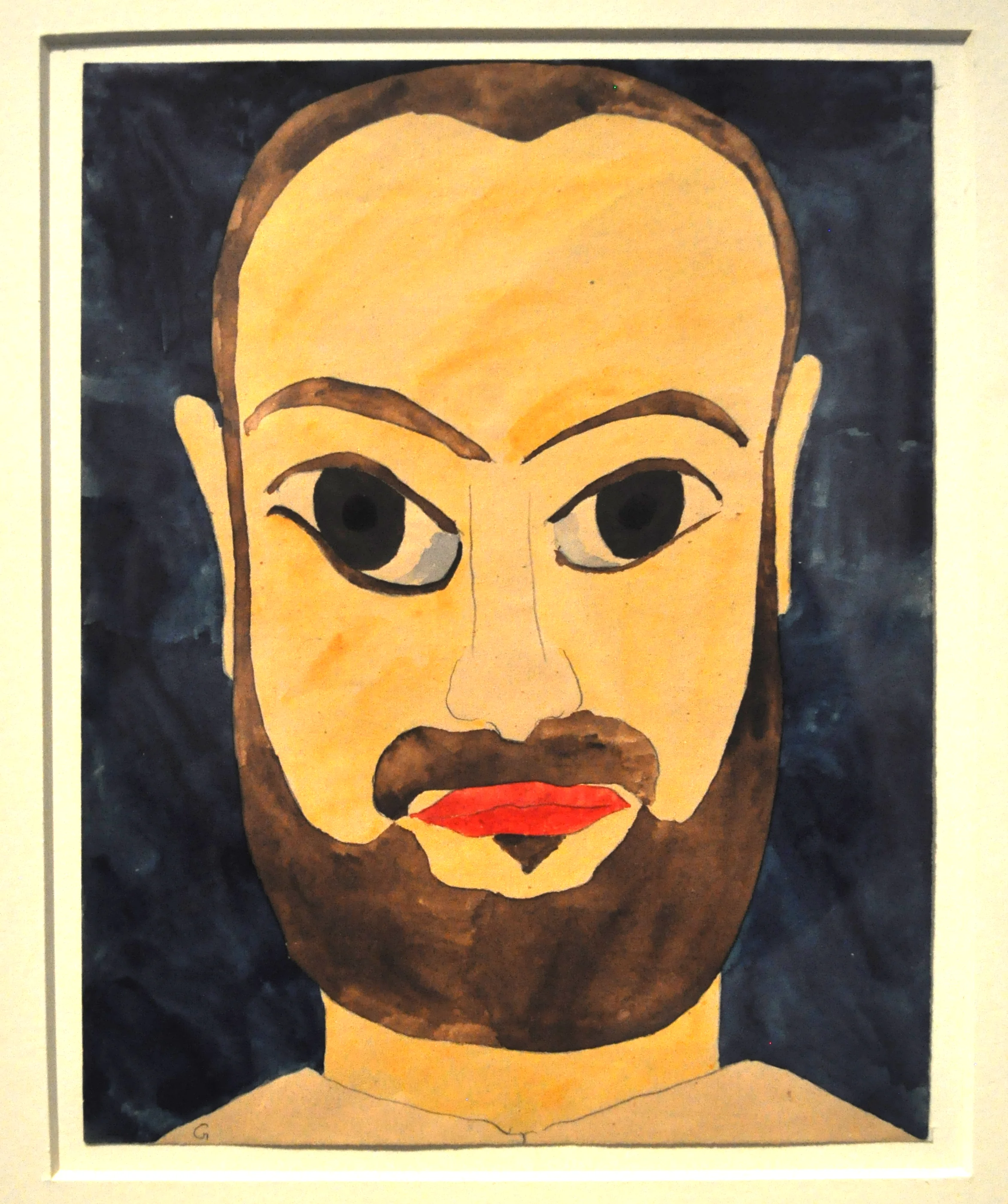
Image from Wikipedia
Image from Wikipedia
Paul Goesch – Avant-garde, Architectural Visions, and the Work of an Extraordinary Artist
An Fascinating Look at the Life, Work, and Impact of the Painter and Architect Paul Goesch
Paul Goesch is one of the most impressive and simultaneously tragic artistic personalities of German modernism. Born on August 30, 1885, in Schwerin and murdered in 1940 in the Nazi killing center Brandenburg, he left behind a body of work that finds its own language between architecture, painting, expressionism, and intellectual radicalism. His biography combines artistic upheaval, mental crises, institutional violence, and a later rediscovery that sheds new light on his significance in art history. ([de.wikipedia.org](https://de.wikipedia.org/wiki/Paul_Goesch?utm_source=openai))
Origins, Education, and Early Artistic Influence
Goesch was raised in an educated middle-class environment; his father, Carl Goesch, was a district court counselor and later a lecturer in Berlin. In 1903, he began studying architecture at the Technical University in Charlottenburg, which he continued in Munich and Karlsruhe. Early on, he combined technical discipline with artistic curiosity, traveling to France, Italy, southern Germany, and the Baltic Sea, developing a perception of form, space, and atmosphere that later characterized his entire creative output. ([de.wikipedia.org](https://de.wikipedia.org/wiki/Paul_Goesch?utm_source=openai))
Even in these years, a dual nature of his work becomes evident: on one hand, architectural construction, and on the other, the expressive charge of line and color. In 1909, he moved to Dresden to live with his brother Heinrich Goesch, where he continued his work and created a decorative painting in a gymnasium in Dresden-Laubegast that still exists today. His education ended in 1910 with his graduation as a governmental building supervisor, but his true path had long led him into an artistic sphere that could no longer be neatly separated between applied architecture and fine art. ([de.wikipedia.org](https://de.wikipedia.org/wiki/Paul_Goesch?utm_source=openai))
Between Architectural Dreams and Modern Art of the 1910s
Goesch's early years reflect a pronounced creative will that echoed in expressionist architecture and utopian spatial concepts. In 1914, he contributed to the anthroposophical Goetheanum in Dornach, a place that underscores his openness to spiritual currents and alternative conceptualizations of the world. During this phase, art, architecture, and an idea of total space combine into a distinct artistic program that extends far beyond conventional architectural practice. ([de.wikipedia.org](https://de.wikipedia.org/wiki/Paul_Goesch?utm_source=openai))
His time as governmental master builder in Culm between 1915 and 1917 was particularly formative. There, he worked as a building officer for the post office while tensions between his professional role and inner artistic drive intensified. The life stages of these years clearly illustrate how strongly Goesch oscillated between state function, personal vision, and fragility. ([paul-goesch.de](https://paul-goesch.de/leben/))
Psychiatric Experiences and Artistic Productivity
Goesch's life was marked by mental crises that early on led to hospitalizations. He was first treated psychiatrically in 1909; later stays followed in Hedemünden, Rasemühle, Schwetz, and Göttingen. It was during these life phases that a large part of his work emerged, and art remained not just a byproduct but a form of expression, resistance, and self-affirmation. ([paul-goesch.de](https://paul-goesch.de/leben/))
In Göttingen, where he lived in psychiatry permanently from 1923, Goesch remained highly productive. The official project page emphasizes that his work is diverse and colorful, and that the exhibition does not aim to reduce him to illness and death. This perspective is crucial: Goesch does not appear as a marginal figure of modernity, but as an artist whose creativity unfolded its own power under extreme conditions. ([paul-goesch.de](https://paul-goesch.de/))
The Work: Gouaches, Architectural Designs, and Visionary Spatial Worlds
Paul Goesch left behind a multifaceted oeuvre of over 2,000 works. The focus is on colored gouaches, as well as architectural designs, murals, room paintings, and drawings. This diversity showcases an artist who not only designed motifs but imagined spaces and created pictorial worlds where architecture becomes a projection of the soul and spirit. ([dewiki.de](https://dewiki.de/Lexikon/Paul_Goesch))
Notable are the monumental formats, such as the room painting in Dresden-Laubegast from 1908, the painting in Berlin-Schöneberg from 1920/1921, and a mural in Göttingen. Although no secure examples of completed constructions are known, conceptual involvement in projects by other architects is considered possible. Thus, Goesch stands on the threshold between realized architecture and artistic vision, as is particularly typical of the expressionists. ([dewiki.de](https://dewiki.de/Lexikon/Paul_Goesch))
Style, Expression, and Intellectual Location
Stylistically, Goesch is associated with modern art of the 1920s and German expressionism. His works combine clear structure with vibrant colors, spiritual pathos, and often symbolically charged imagery. A Goesch, sensitively readable against the backdrop of French and German art history, is thus neither a pure architect nor a pure painter, but a boundary crosser between disciplines who implemented the language of modernity with personal radicalism. ([paul-goesch.de](https://paul-goesch.de/))
The influence of anthroposophical ideas and proximity to utopian thought models enhance this effect. Goesch's work is less concerned with decorative elegance than with spiritual spaces, metaphysical tensions, and intellectual order. This is where his art-historical significance lies: he formulates a language of images and forms, in which architecture, interior space, and vision merge. ([en.wikipedia.org](https://en.wikipedia.org/wiki/Paul_G%C3%B6sch?utm_source=openai))
Persecution, Devaluation, and Later Rediscovery
In 1937, the Nazi regime confiscated five of Goesch's paintings from public collections as part of the "Degenerate Art" campaign. This rupture exemplifies the cultural-political violence of that time, which not only defamed avant-garde art but systematically destroyed it. Goesch himself was murdered in 1940 in the Brandenburg killing center, an end that inextricably links his biography with the history of Nazi crimes. ([dewiki.de](https://dewiki.de/Lexikon/Paul_Goesch))
The rediscovery of his work is primarily thanks to the research of Stefanie Poley. Works by Goesch are now found, among others, in the Academy of Arts, the Berlinische Galerie, the Prinzhorn Collection, and the Canadian Centre for Architecture in Montreal. Moreover, the memory culture surrounding Goesch is supported by the participatory exhibition project and the special exhibition shown in 2024 at the City Museum of Brandenburg an der Havel. ([dewiki.de](https://dewiki.de/Lexikon/Paul_Goesch))
Cultural Influence and Art Historical Relevance
Paul Goesch is now an important name in the study of expressionist architecture, the history of psychiatry, and modern art. His work provides insights into the productive tensions in which artistic freedom, institutional limitation, and social exclusion intersect. For art history, he is thus not merely a singular case, but a prominent figure at the interface of avant-garde and persecution. ([paul-goesch.de](https://paul-goesch.de/))
His works also have documentary value: they testify to the diversity of a modernity that thrives not only on well-known centers and big names but also on biographies that have long been overlooked. The museums and archives where Goesch is represented demonstrate the contemporary significance of his rediscovery. Anyone engaged with expressionist art, architectural visions, and the ruptures of the 20th century will inevitably come across his name. ([dewiki.de](https://dewiki.de/Lexikon/Paul_Goesch))
Conclusion: Why Paul Goesch Continues to Move Us Today
Paul Goesch fascinates with the intensity of his work and the tragedy of his life story. He represents an art that arises from inner tension, formal boldness, and intellectual independence. Those who view Goesch's works encounter not only a significant artist of German modernity but also a person whose creation continues to resonate today and sharpens our perspective on architecture, expressionism, and memory culture. A visit to his exhibitions and a deeper engagement with his work are absolutely worthwhile. ([paul-goesch.de](https://paul-goesch.de/))
Fans' Voices:
No official profile found.
Official Channels of Paul Goesch:
- Instagram: no official profile found
- Facebook: no official profile found
- YouTube: no official profile found
- Spotify: no official profile found
- TikTok: no official profile found
Sources:
- Wikipedia – Paul Goesch
- Paul Goesch – Official Project Page
- Paul Goesch – Life
- DeWiki – Paul Goesch
- Wikidata – Paul Goesch
- Centre Pompidou – Paul Goesch
- Wikimedia Commons – Creator: Paul Goesch
- Chełmno.info – Paul Goesch
- Moeller Fine Art – Paul Goesch
- DeWiki – Work, Museums, and Literature References
- Paul Goesch – Data Protection/Website Notes
Upcoming Events
Paul Goesch & Matthias Noggler
Opening / Opening
Paul Goesch & Matthias Noggler
The Art Association in Schwerin presents the duo exhibition of the artists Paul Goesch and Matthias Noggler
Paul Goesch & Matthias Noggler Exhibition
Dive into the world of art with the exhibition by Paul Goesch and Matthias Noggler at Kunstverein Schwerin.
Paul Goesch & Matthias Noggler Exhibition
Experience the unique works of Paul Goesch and Matthias Noggler in the duo exhibition at the Cultural Forum Schwerin.